Medically reviewed by Dr Sin Yong · Last reviewed · 6 min read
Published 6 October 2026 · Reviewed by Dr Sin Yong
TCA CROSS, chemical reconstruction of skin scars, is a technique in which a high concentration of trichloroacetic acid, commonly 70 to 100 per cent, is applied precisely into the floor of individual atrophic scars, usually ice pick scars. The controlled injury prompts collagen to rebuild the tract from the base, so the scar becomes shallower over a course of sessions spaced weeks apart. The skin between scars is left alone, which is what separates it from a peel.
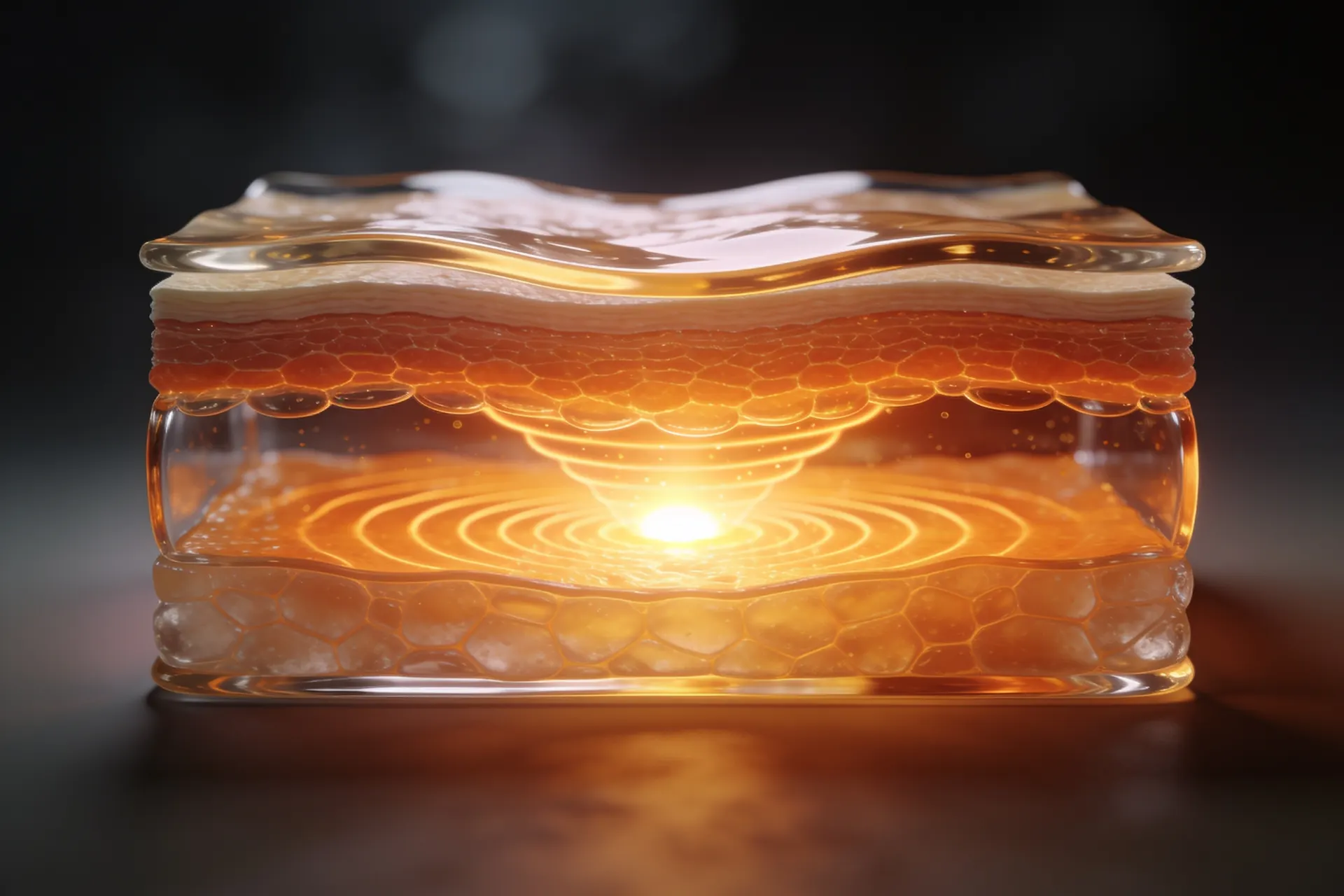
Illustrative. An ice pick scar is a well, not a dip; CROSS works from the bottom of it.
Key facts
Full name
Chemical Reconstruction Of Skin Scars, described by Lee and colleagues in 2002
Agent
Trichloroacetic acid at high concentration, commonly 70 to 100 per cent, applied as a microdroplet
Target
Ice pick scars and narrow, deep boxcar scars; not broad rolling scars
Mechanism
Focal injury to the scar floor prompts collagen that raises and widens the tract over repeat sessions
Healing
Each treated scar frosts white, then forms a small crust that sheds within about a week
What is TCA CROSS?
TCA CROSS is a focal technique for the scar type that resurfacing struggles with. An ice pick scar is a deep epithelial tract, a well rather than a dip, and fractional lasers polish the plain around it while barely changing its depth. CROSS inverts the geometry: a physician places a microdroplet of high-strength trichloroacetic acid into the floor of each scar with a fine applicator, deliberately injuring the tract so that it rebuilds shallower from below.
The acid causes the treated scar to frost white within seconds. A small crust forms and sheds over roughly a week, and the collagen remodelling that lifts the scar floor continues for weeks after each session. Because the effect is cumulative, the technique is repeated over a course, with each cycle remodelling the tract further. The surrounding skin is spared, which is why the injury, and the pigment risk that goes with it, is confined to the scar itself.
How is it used in aesthetic medicine?
Almost no scarred face carries only ice picks, so CROSS is a chapter in a plan rather than the plan. In Dr Sin Yong's sequencing, CROSS handles the ice pick census while the S3 Resurfacing Lift on the DEKA Tetra Pro treats boxcars and the field, subcision releases tethered rolling scars, and any established volume deficit is supported from below. Active acne is controlled first, and flat marks left behind are triaged as post-inflammatory erythema or hyperpigmentation rather than treated as scars.
Each application stings sharply for a few seconds; many people manage a session without anaesthetic, and the number of scars treated per session is planned at assessment. In Fitzpatrick III to V skin, which is most of what is treated in Singapore, transient darkening around treated scars is common and typically fades with photoprotection. Confining the droplet to the scar floor, with no spillover onto the surrounding skin, is the main protection, and strict sun protection afterwards is part of the treatment.
“You cannot resurface your way out of a well — CROSS works because it is the one technique that climbs down into the scar instead of polishing the ground around it.”
Dr Sin YongOn why ice pick scars need their own technique
What is it often confused with?
A TCA peel is the usual confusion. A peel spreads a lower concentration of acid across an area of skin to renew the surface; CROSS places a much higher concentration into individual scars only, so the injury is confined to the scar walls and the skin between scars is untouched. The agent is the same; the aim, the strength and the technique are not.
It is also confused with fractional laser resurfacing, which treats the surface and the dermis across an area and suits boxcar and textural scars, and with subcision, which works beneath the dermis to release a tether. CROSS does neither. The three are teammates in a sequence, each matched to a scar type, not competitors for the same scar. The acne scar types guide sets out how ice pick, boxcar and rolling scars are told apart.
When is it not the answer?
CROSS treats only the ice pick component of a scarred face. Broad rolling scars, shallow boxcars and general texture need other tools, and it is not used across a whole area. Raised scars, keloids and hypertrophic scars are an excess of collagen rather than a tract and are managed differently. A scar that is too deep or wide for CROSS or resurfacing may be an isolated candidate for punch excision, which is referred to a plastic surgery or dermatology specialist.
It is usually postponed while acne is active or the skin is infected or inflamed in the area. A tendency to keloid or raised scarring, recent isotretinoin and a history of marked post-inflammatory darkening are discussed at assessment, because each affects whether CROSS is suitable and how it is planned. High-strength acid applied freehand at home from an online kit is how case reports of widened scars get written; this is a physician's technique with a physician's learning curve.
Frequently Asked Questions
No. A TCA peel spreads a lower concentration across an area to renew the surface. TCA CROSS places a much higher concentration into individual scars only, confining the injury to the scar walls and leaving the skin between scars alone.
Ice pick scars and narrow, deep boxcar scars. It does not treat broad rolling scars, which usually need subcision, or shallow textural scarring, which belongs to fractional resurfacing or RF microneedling.
Temporary darkening around treated scars is common in darker skin types and typically fades with photoprotection. Confining the acid to the scar floor is the main protection, which is why the technique is performed by a physician rather than attempted at home.
Lasers remodel the surface plain; an ice pick's depth sits largely below their reach. The two are sequenced together, laser for the field and CROSS for the wells, rather than one substituting for the other.
Focal treatment of acne scars with trichloroacetic acid: chemical reconstruction of skin scars method. Dermatologic Surgery (PubMed), 2002. source
Evaluation of CROSS technique with 100% TCA in the management of ice pick acne scars in darker skin types. Journal of Cosmetic Dermatology (PubMed), 2011. source