Key facts
- Full name
- Subcutaneous incisionless surgery, described by Orentreich and Orentreich in 1995
- Target
- Fibrous bands running from the underside of the dermis to deeper tissue, which hold a scar down
- Plane
- Subcutaneous, beneath the dermis; the skin surface is not cut
- Suits
- Rolling scars and tethered boxcar scars that stay pinned when the skin is stretched
- Sequence
- Release before resurfacing; the foundation step of Dr Sin Yong's 4D Scar Reconstruction protocol
What is subcision?
Subcision, short for subcutaneous incisionless surgery, addresses a tether directly. When deep acne inflammation heals, scar tissue can form as a vertical cord anchoring the underside of the skin to the tissue beneath it. The mechanics are those of an upholstery button: the fabric is intact, and the dimple exists because a thread pulls it down from inside. Resurfacing the fabric indefinitely does not remove the dimple, because its cause is the thread.
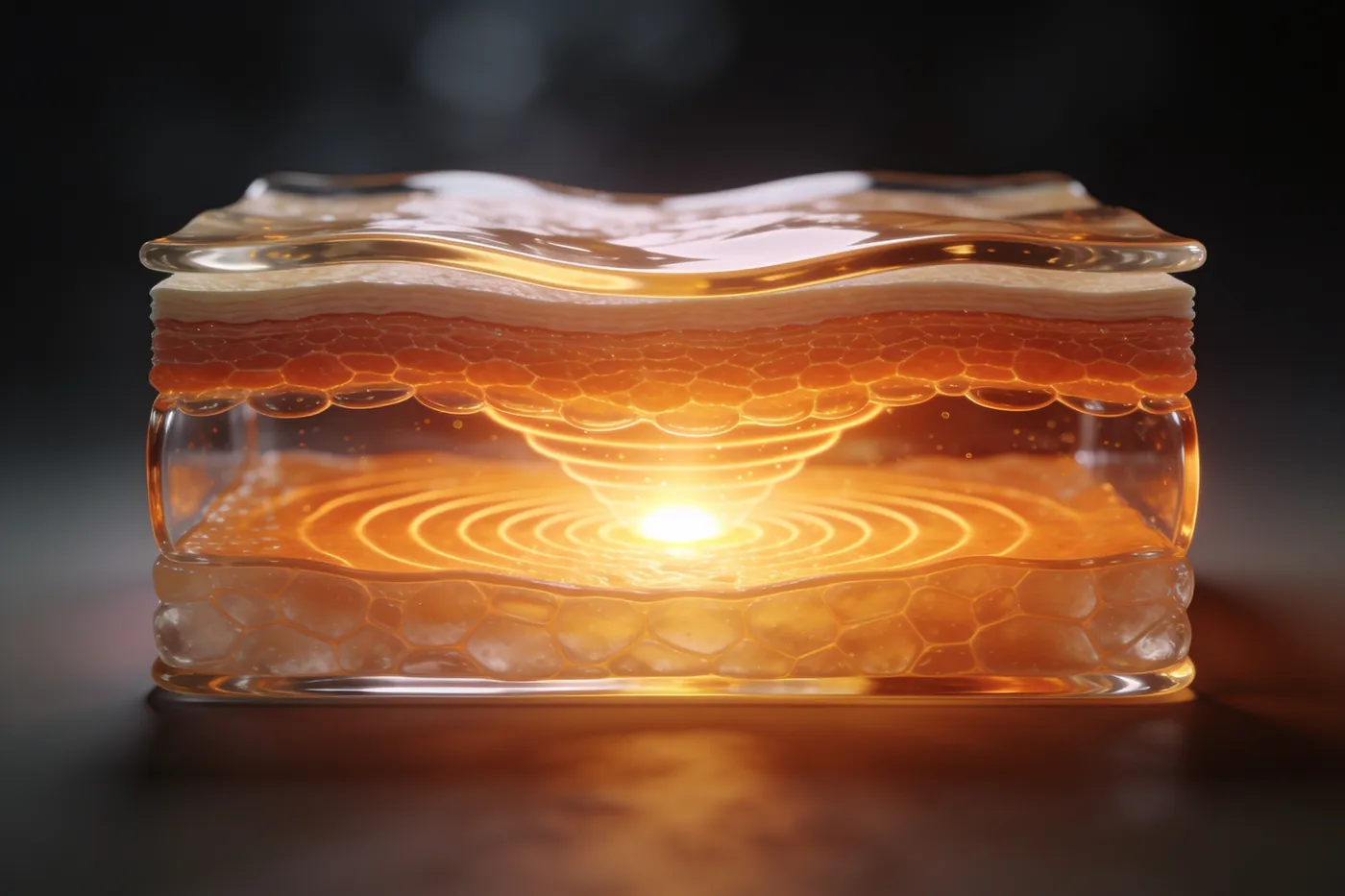
The procedure divides that thread. Under local anaesthetic, a needle or blunt cannula is passed beneath the scar, in the subcutaneous plane, and swept to cut the fibrous band. The skin above is not incised. Two things follow: the downward pull is gone, so the surface can sit level, and the controlled injury beneath the scar triggers a repair response, with new collagen forming in the space where the band used to be and supporting the released skin from below.
How is it used in aesthetic medicine?
Its main use is the rolling acne scar, the broad, shallow depression with sloping edges that gives the skin a wave-like surface, and the boxcar scar that is tethered at its base. Traumatic and surgical scars can also be tethered years after the original injury. Whether a scar qualifies is decided by examination: stretched between two fingers, a surface scar flattens while a tethered scar stays pinned, and a tethered scar deepens when the face animates because the band transmits the pull of movement beneath it.
Sequence matters. Within Dr Sin Yong's 4D Scar Reconstruction protocol, subcision is the foundation step: tethers are released first, Radiesse may be placed after release where an established volume deficit sits beneath the scar, and the S3 Resurfacing Lift then treats the scar walls and surface. Bruising and swelling over the treated area are expected and settle on their own. In Fitzpatrick III to V skin the depth of work and the aftercare are planned around post-inflammatory pigment risk.
“You can resurface a tethered scar indefinitely. The tether keeps pulling it down.”
Dr Sin YongOn why scar treatment plateaus
What is it often confused with?
Subcision is not resurfacing. Fractional CO2 laser, RF microneedling and TCA CROSS all act on the dermis or the scar walls from above; subcision works in the plane beneath the dermis, deeper than any resurfacing energy is intended to reach. Neither category replaces the other, which is why plateaued scar journeys so often turn out to be tethered scars that were resurfaced repeatedly without ever being released.
It is also distinct from punch excision or elevation, in which an individual deep scar is cut out or raised and sutured; those are surgical scar revision and are referred to a plastic surgery or dermatology specialist where needed. And although subcision is sometimes paired with filler, it is not a filler treatment: the needle releases, and any product placed afterwards does a separate job of supporting a depression from below.
When is it not the answer?
A scar that flattens when the skin is stretched is a surface problem, and subcision has nothing to release; resurfacing is the right category. A narrow, deep ice pick scar is a well rather than a tethered dip, and the technique that reaches its floor is TCA CROSS. Raised scars, keloids and hypertrophic scars are the opposite problem, excess collagen rather than a tether, and are managed differently.
Active acne is controlled first, because releasing scars while new ones are forming makes little sense and inflamed skin marks easily. A bleeding tendency or anticoagulant medication, a keloid tendency and a history of marked post-inflammatory darkening are discussed at assessment, since bruising and inflammation handled carelessly can leave marks of their own. Not every scar needs subcision, and not every tethered scar needs everything else; which scars qualify comes out of the examination, scar by scar.