Published 13 October 2026 · Reviewed by Dr Sin Yong
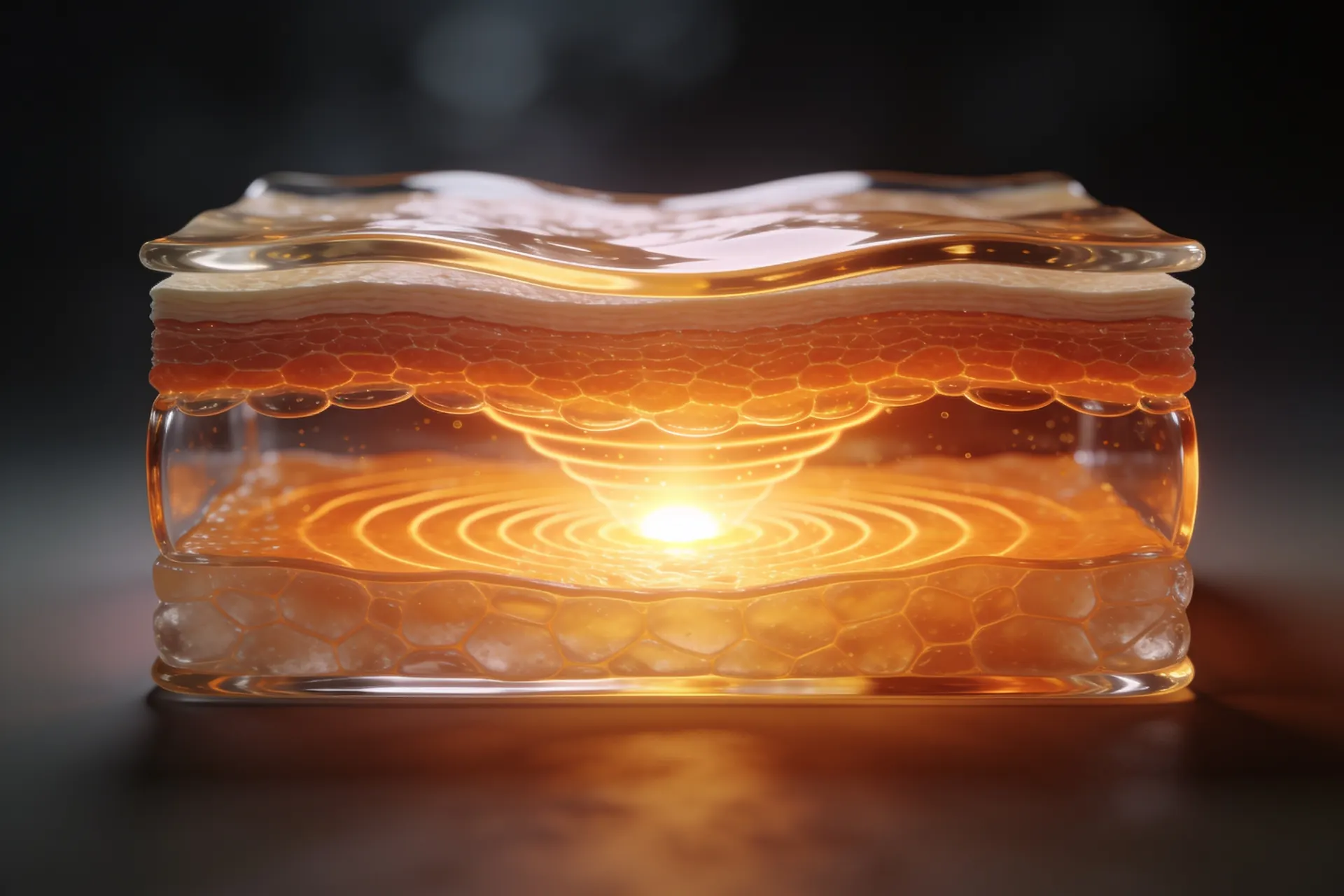
Erbium laser is a name that covers two quite different lasers. The erbium:YAG laser at 2,940 nm is ablative: absorbed by water far more strongly than CO₂, it vaporises tissue with a thinner zone of heat around each column and less tightening response. The erbium glass laser at 1540 or 1550 nm is non-ablative: it heats the dermis in columns beneath an intact surface. Erbium glass is part of Dr Sin Yong's FSX Laser.
Key facts
Erbium:YAG
2,940 nm, ablative, very strongly absorbed by water; thin heat zone, less tightening than CO₂
Erbium glass
1540 or 1550 nm, non-ablative; heats the dermis beneath an intact surface (Fraxel-class wavelength)
On this site
1540 nm erbium glass paired with 1927 nm thulium in the FSX Laser protocol
Skin types
FSX is used in darker skin types, including Fitzpatrick V and VI, with settings chosen for the skin at every session
Where erbium lasers matter on this site
Both erbium lasers target water, but at 2,940 nm erbium:YAG is absorbed so strongly that it vaporises a thin layer with little heat beyond it, while 1540 or 1550 nm erbium glass is absorbed weakly enough to pass through the epidermis and heat columns in the dermis. The second is the one Dr Sin Yong uses, and these are the pages where it matters.
When someone says erbium, I ask which one: the laser that vaporises and the laser that heats under an intact surface share a name and nothing else.— Dr Sin Yong
FSX Laser: 1540 nm erbium glass paired with 1927 nm thulium, for fine lines, pores, superficial acne scars, redness, early laxity and lax eyelid skin.
The ablative member of the family, erbium:YAG, is not a protocol on this site; where ablation is needed, the S3 Resurfacing Lift uses fractional CO₂ instead.
Not to be confused with
The word erbium covers two lasers with opposite behaviour, and both are confused with their neighbours.
Erbium:YAG vs erbium glass. The first ablates at 2,940 nm; the second heats beneath an intact surface at 1540 or 1550 nm. "Erbium laser" on a price list could mean either, so ask which.
Fractional CO₂. Ablative at 10,600 nm, also absorbed by water, but with a wider zone of heat around each column and more tightening response than erbium:YAG.
Fraxel. A brand built on 1550 nm erbium glass and 1927 nm thulium. The FSX Laser uses the same class of wavelengths on a different platform; it is not Fraxel.
Thulium 1927 nm. A separate, more superficial non-ablative wavelength paired with erbium glass in FSX for pigment and texture. It is not an erbium laser.
Nd:YAG 1064 nm. A melanin and haemoglobin laser, not a water laser. Different chromophore, different jobs.
What decides whether an erbium laser matters for you
Erbium glass suits a particular set of problems and skin types, and knowing where it stops is as useful as knowing what it does.
Depth of the problem. Fine texture, pores, superficial scars and early laxity sit within reach of 1540 nm columns; deep boxcar and ice-pick scars do not, and go to ablative CO₂.
Skin type. FSX is used in Fitzpatrick V and VI with settings chosen for the skin at every session; the pigment risk is lower than with ablation but not zero.
Recovery. Non-ablative treatment leaves the surface intact, which is why FSX is the option with the shorter recovery of the two protocols.
Known side effects. Acne-like eruptions and cold sores are the commonest after 1550 nm-class lasers, so a history of cold sores is asked about and covered.
Eyelids. Lax eyelid skin is one of the few places a non-ablative pass is chosen over heavier tools; the non-surgical eyelid lift page explains when.
Dr Sin Yong lets scar depth, not the name of the laser, decide between FSX and S3.
Where it fits
When a clinic says erbium, the useful questions are whether it ablates and how deep it reaches. Dr Sin Yong uses the non-ablative kind: his FSX Laser combines 1540 nm erbium glass, which reaches the mid-dermis for collagen work, with 1927 nm thulium, which acts more superficially on pigment and texture, for fine lines, pores, superficial acne scars, redness, early laxity and lax eyelid skin, with a shorter recovery than S3. A retrospective series of 961 treatments with a closely related 1,550 nm laser recorded complications after 7.6%, most often acne-like eruptions and cold sores, with post-inflammatory hyperpigmentation more frequent in darker skin, so the same kinds of risk apply and are planned for. The ablative alternative, and how erbium:YAG differs from it, is explained under fractional CO₂ laser; the protocol itself is defined under FSX Laser.
Frequently Asked Questions
The non-ablative kind: 1540 nm erbium glass, paired with 1927 nm thulium in his FSX Laser protocol. It heats columns in the dermis beneath an intact surface for texture, pores, superficial scars, redness and lax eyelid skin. He does not run an ablative erbium:YAG; where ablation is needed for deep scars, the S3 Resurfacing Lift on fractional CO2 is used instead.
The non-ablative erbium glass wavelength is used on Fitzpatrick V and VI skin on this site, with settings chosen for the skin at every session, because the surface is left intact and less heat reaches the epidermis than with ablation. Post-inflammatory darkening remains the main risk in darker skin and is planned for with sun protection and conservative parameters. The ablative erbium:YAG carries more pigment risk.
It depends which erbium. Erbium:YAG at 2,940 nm is ablative and vaporises tissue. Erbium glass at 1540 or 1550 nm is non-ablative and heats the dermis beneath an intact surface; this is the one in Dr Sin Yong's FSX Laser.
No. Fraxel is a brand of non-ablative fractional laser that also pairs an erbium wavelength with 1927 nm thulium. FSX Laser is Dr Sin Yong's protocol using 1540 nm erbium glass and 1927 nm thulium with its own sequence of passes; the wavelength families are similar, the device and protocol are not.
References
1064-nm Picosecond Laser vs 1927-nm Fractional Thulium Laser for Atrophic Acne Scars in Asian Patients: A Randomized Split-Face Study. PMC. pmc.ncbi.nlm.nih.gov
Treatment of Striae Distensae with Nonablative Fractional Laser versus Ablative CO2 Fractional Laser: A Randomized Controlled Trial. PMC, 2011. pmc.ncbi.nlm.nih.gov
Comparative Efficacy and Safety of Fractional CO2 Laser and Microneedling Radiofrequency for Atrophic Acne Scars: A Systematic Review. PMC. pmc.ncbi.nlm.nih.gov