How exosomes are used on the scalp, and what Singapore allows, is set out on exosome treatment.
Published 1 November 2026 · Reviewed by Dr Sin Yong
Hair transplant cost in Singapore is set by the surgical team, from the number of grafts, the method, the facility and the follow-up; Dr Sin Yong does not perform transplants and refers when follicles are lost. Non-surgical hair loss treatment fees depend on the diagnosis, the in-clinic layers and home care, and are quoted in writing after an examination.
Why is there no hair loss treatment figure on this page?
There is no hair loss treatment figure here because Singapore's rules on healthcare advertising restrict how fees may be published, and because the plan depends on a diagnosis that has not yet been made. Thinning can be androgenetic alopecia, a shedding phase after illness or childbirth, patchy alopecia areata or loss from tight styling, and each has a different route. A figure given before the scalp is examined would describe a package, not your treatment.
Hair transplant cost in Singapore: what sets the surgical fee
The hair transplant cost in Singapore is set by the surgical team that performs the procedure, after their own examination, and a small number of factors drive it. Dr Sin Yong does not perform hair transplants and does not quote surgical fees, but the factors are worth knowing before you compare quotes, here or abroad.
Factor
Why it moves the fee
What to ask
Number of grafts
Follows the size of the bare zone and the stage of loss, limited by what the donor area can spare
How many grafts, and how was that number reached from my donor area?
Method: FUE, DHI or FUT
Each differs in how grafts are taken or placed, and in the time and team it needs
Which method, and why that one for my scalp?
Who performs each step
Some teams delegate extraction or placement to technicians
Who designs the hairline, who extracts and who implants?
Facility and anaesthesia
The operating setting, local anaesthesia and medicines form part of the figure
Is the facility licensed, and what is included on the day?
Follow-up
Review visits, and care of complications if they arise
Which reviews are included, and whom do I contact if something is wrong?
Medical care of the native hair
A transplant does not stop androgenetic alopecia, so medication usually continues
What is the plan for the hair around the grafts?
A later procedure
Loss can progress, and some people are later advised to consider more grafts
How is future loss allowed for in the donor area?
Two costs are easy to leave out of a comparison: the ongoing medical care that protects native hair, and travel and aftercare if the procedure is done abroad. Complications are uncommon but do occur, a 2025 scoping review of hair restoration surgery found, which is why follow-up belongs in the comparison (Liu 2025). A per-graft figure given without a scalp examination says little, because the graft count is itself an estimate until the donor area has been assessed. Whether a transplant is the right tool at all is covered under hair transplant Singapore: FUE, FUT and the alternatives.
Hair loss treatment cost in Singapore starts with the diagnosis
The first factor in hair loss treatment cost in Singapore is the type of hair loss, because it decides whether a programme is needed at all. Dr Sin Yong examines the scalp himself with trichoscopy, which shows whether hairs are miniaturising, shedding at the root or missing in patches, and orders blood tests where iron, thyroid or nutritional factors are suspected. The tests are itemised on the quote.
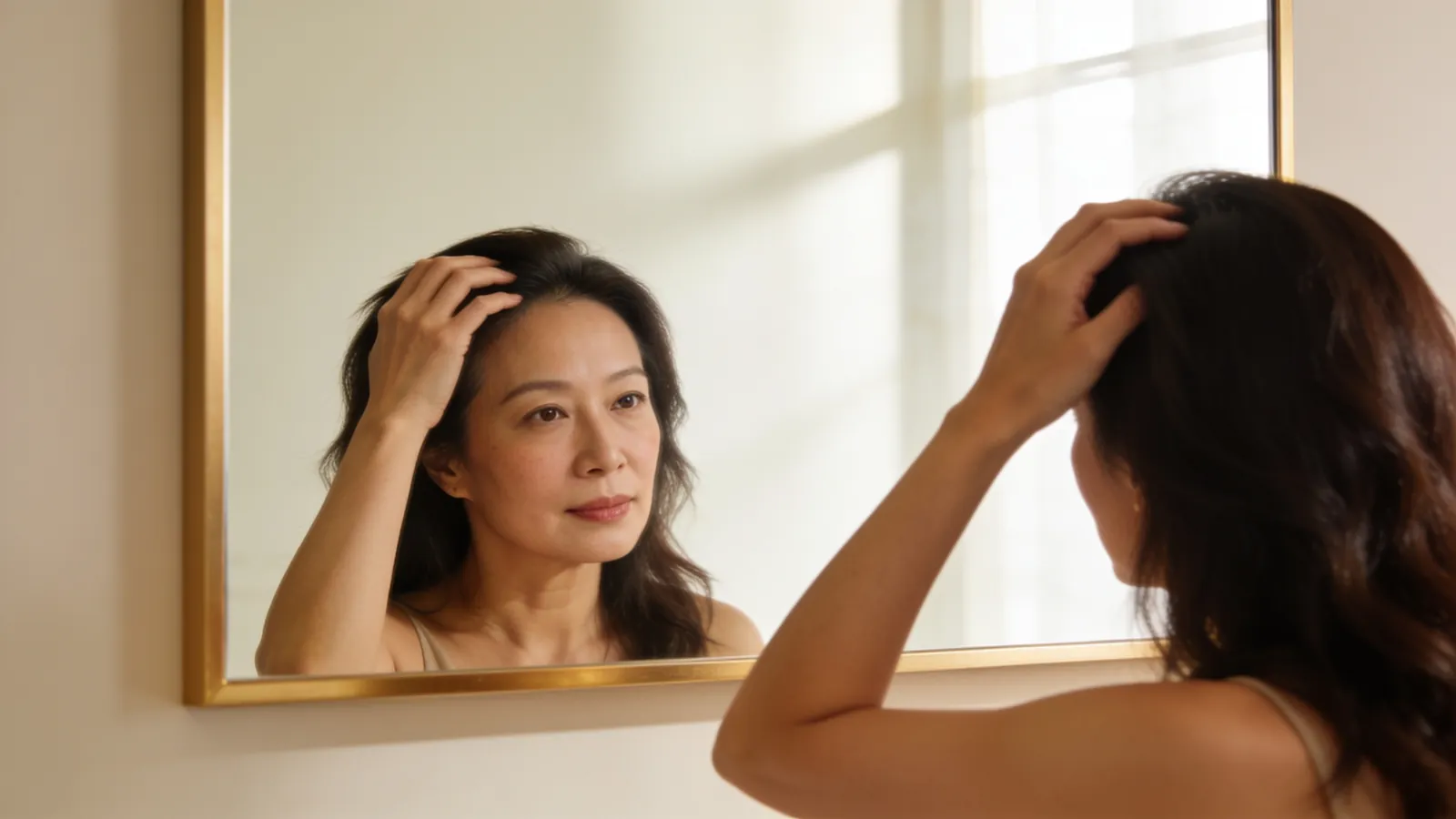
Illustrative image — not a patient.
Type
What follows
Effect on the plan
Androgenetic alopecia (pattern loss)
Medication as the foundation, with in-clinic layers where follicles survive
A layered programme, graded on the Norwood or Ludwig scale
Telogen effluvium (shedding)
Tests for a trigger; classic cases settle on their own
Often tests and nutritional support, without procedures
Referral for a transplant opinion rather than a programme
The grade matters as much as the type. Early miniaturisation needs fewer layers than established thinning, and a smooth, shine-bare zone is not sold stimulation it cannot use.
“I do not quote a programme before I know the type of hair loss. Some scalps need a blood test, not a course.”
Dr Sin YongOn how hair loss treatment is quoted
Laser, RF microneedling and exosomes: the in-clinic layers
Dr Sin Yong's in-clinic hair protocol uses laser and RF microneedling to stimulate the scalp, with exosomes applied over the treated areas straight afterwards, and which of these a plan includes is the next factor in the fee. His laser work includes H2LT, a low-level laser protocol, and fractional non-ablative 1540 nm scalp energy, a protocol he published in 2023.
Autologous micrografts from the back of the scalp, placed into thinning zones
A separate procedure, used in some plans where surviving follicles are confirmed
The evidence supports this as layered care rather than any single answer. A 2025 meta-analysis of 38 studies with 3,098 patients found low-level laser increased hair density in androgenetic alopecia compared with placebo. A 2019 randomised split-scalp trial in 30 men found a 1550 nm fractional laser plus minoxidil outperformed minoxidil alone, and suggested the laser opens routes for topical delivery. Exosomes are newer: a 2023 systematic review found 16 studies, 15 of them preclinical, and called the clinical evidence limited. These are used here in place of PRP.
Medication and home care: Nourkrin and Derive exosome serum
What happens between visits is part of the plan and part of the cost. For pattern loss, prescription medication, oral or topical, is the foundation where it suits, prescribed after the side effects have been discussed and with blood tests where female thinning or shedding is involved; the options are on anti-hair-loss medications.
Nourkrin is a nutritional supplement used as daily support, in shedding and alongside medical treatment; what the evidence does and does not show is on hair loss supplements.
Derive is an exosome serum applied to the scalp at home daily, continuing the in-clinic exosome work between visits.
Each is named on the quote, so the full cost of the plan is visible, not just the clinic visits. Nothing at home is sold as a substitute for diagnosis, and correctable deficiencies found on blood tests are treated first.
Singapore hair transplant price: questions people ask
These are the cost questions people most often ask before comparing hair transplant quotes, answered without figures, because fees cannot be advertised and depend on the examination.
Is a hair transplant cheaper in Malaysia, Thailand or Turkey than in Singapore?
Fees abroad are often advertised lower, but the figures rarely describe the same thing. Compare the number of grafts, the method, who performs each step, whether the facility is licensed and what follow-up is included. Then add flights, accommodation, time off work and the cost of any review or complication care once you are home, which falls to a doctor who did not perform the surgery. Bring back written records of the method, graft count and medicines used.
Does MediSave or insurance cover a hair transplant in Singapore?
Hair transplantation for pattern hair loss is generally regarded as cosmetic, and MediSave and most insurance plans do not cover cosmetic procedures. Investigations for an underlying medical cause of hair loss may be handled differently. Check with your insurer and the surgical team before you commit, and ask for an itemised quote so that you can see what each part of the fee covers.
Does the cost of a hair transplant include medication afterwards?
Often not. The surgical fee covers the procedure and whichever reviews the team includes, while medication that protects the native hair is a separate, ongoing part of the plan, because a transplant does not stop androgenetic alopecia. Ask the surgical team what their fee includes, and ask the doctor who manages your hair loss what the medical side involves. At this practice the non-surgical plan is quoted in writing after an examination.
Is a hair transplant worth the cost?
It can be, when a zone is bare and stable, the donor area can spare enough and ongoing loss is controlled, because relocation is then the only tool that replaces lost follicles. It is a poorer use of money and donor hair when loss is still progressing quickly, when thinning is diffuse, or when living follicles could still respond to medical treatment. Making that judgement is the purpose of a scalp assessment before any quote is compared.
Review, transplant referral and comparing hair loss quotes
Progress is reviewed with standardised photography and repeat trichoscopy, and the plan is adjusted at each review rather than fixed in advance, so a programme is not sold as a block. Hair grows slowly and response varies between people, which is why change is judged over months by measurement rather than in the mirror. Treatment takes place at the clinic on Orchard Road, Singapore.
Dr Sin Yong does not perform hair transplants. Where follicles in a zone have been lost, he says so and refers to an appropriate transplant team, and the medical foundation usually continues afterwards; the two routes are compared in transplant vs non-surgical hair restoration. Before comparing quotes anywhere, it is reasonable to ask:
Was the type of hair loss diagnosed, and how?
Which layers are planned, and why those for my scalp?
What is done at home, and is it included in the figure?
How is progress measured, and how often is the plan reviewed?
Not on a quote at this practice: packages sold on the day, a fixed course sold in advance, and stimulation for zones with no follicles left.
Your next step
1. MessageWhatsApp +65 8023 7170 with what is bothering you. A reply comes from the clinic, not a bot.
2. AssessmentDr Sin Yong examines you himself on Orchard Road, with ultrasound where earlier filler is involved.
3. A plan in writingWhat he would do, what he would not, the fee factors, and the option of no treatment.
Every treatment is performed by Dr Sin Yong personally. Singapore Medical Council registered · invited to share his clinical expertise internationally for CLASSYS, DEKA, Fotona, Hironic and Ilooda.
Bring recent blood test results and a list of hair products, supplements and medicines you use. How consultations work.
Singapore's rules restrict fee advertising, so no figure is given here. Hair loss treatment cost depends on the type and grade of hair loss, the tests needed, which in-clinic layers suit the scalp, such as laser and RF microneedling with exosomes, any Regenera Activa, the medication and home care, and the reviews. A written quote follows trichoscopy and history.
Quotes for hair loss treatment usually describe different things. One may be a fixed package of scalp sessions without a diagnosis; another a doctor-led plan with trichoscopy, blood tests, medication, procedures and review. Compare whether the type of hair loss was diagnosed, which treatments are included and why, what is done at home, and how progress is measured.
Instead of PRP, Dr Sin Yong's in-clinic hair protocol uses laser and RF microneedling with exosomes applied over the treated areas, with Regenera Activa autologous micrografts in some plans, built on prescription medication where it suits. Home care includes Nourkrin and Derive exosome serum. The layers are chosen after the type of hair loss is diagnosed.
Yes. Regenera Activa is a separate procedure in which small grafts from the back of the scalp are processed into micrografts and placed into thinning zones, so it is itemised on its own. It is used in some plans, where trichoscopy confirms surviving follicles, and not in others. Zones that are smooth and bare are not suitable for it.
They are named on the quote so the whole plan is visible. Nourkrin is a nutritional supplement taken daily, and Derive is an exosome serum applied to the scalp at home. Both support the in-clinic treatment and prescription medication rather than replacing them, and whether they suit you is decided after the type of hair loss is known.
No. Dr Sin Yong does not perform hair transplants. When follicles in a zone have been lost and no stimulation can revive them, he explains this and refers to an appropriate hair transplant team. Medical treatment usually continues after a transplant, because a transplant moves hair but does not stop the process behind the loss.
No. Hair loss treatment is planned after diagnosis and quoted in writing as its parts: tests, procedures, medication, home care and reviews. Packages and fixed courses sold in advance are not offered, because the plan changes with the response measured at each review. A written plan can be taken home, and no decision is needed at the first visit.
The hair transplant Singapore cost follows the number of grafts, the technique and the surgical team, and it is separate from the cost of keeping existing hair with medication and laser. Dr Sin Yong sets out the non-surgical option first, because hair that is still alive is kept before lost hair is replaced, and gives fees in writing.
The hair transplant cost in Singapore follows graft numbers and technique, and it is separate from the cost of stopping ongoing loss with medication and the H2LT laser. Dr Sin Yong sets out the non-surgical option first and gives every fee in writing after a scalp examination.
The Singapore hair transplant price varies with the number of grafts, FUE versus strip technique, the surgical team's experience and whether medical treatment to protect existing hair is included. Comparing per-graft figures without a scalp assessment is not meaningful, which is why Dr Sin Yong examines first.
Clinics use both. Some quote per graft, others per session or by area, and some include medication and reviews in the fee. When comparing quotes, ask how many grafts are planned and whether the figure counts grafts or individual hairs, what is included, such as anaesthetic, medicines and follow-up visits, and what happens if a second session is needed. The number of grafts follows the area and the donor supply, which only an examination can estimate.
References
Low-level laser and LED therapy in alopecia: a systematic review and meta-analysis. Dermatologic Surgery (Perez SM, Vattigunta M, Kelly C, Eber A), 2025. source
A randomized, investigator-blinded, controlled, split-scalp study of the efficacy and safety of a 1550-nm fractional erbium-glass laser, used in combination with topical 5% minoxidil versus 5% minoxidil alone, for the treatment of androgenetic alopecia. Lasers in Medical Science (Suchonwanit P, Rojhirunsakool S, Khunkhet S), 2019. source
Systematic review of exosome treatment in hair restoration: preliminary evidence, safety, and future directions. Journal of Cosmetic Dermatology (Gupta AK, Wang T, Rapaport JA), 2023. source
A Scoping Review on Complications in Modern Hair Transplantation: More than Just Splitting Hairs. Liu RH, Xu LJ, McCarty JC, et al. 49:585-595. Aesthetic Plastic Surgery, 2025. pubmed.ncbi.nlm.nih.gov
About this page: written and medically reviewed by Dr Sin Yong, MBBS (NUS), MRCS (Edinburgh) · Last reviewed 6 November 2026 · Illustrative images only, not patients · Editorial policy