Calcium hydroxylapatite (CaHA): what the term means
Medically reviewed by Dr Sin Yong · Last reviewed · 3 min read
Published 13 October 2026 · Reviewed by Dr Sin Yong
Calcium hydroxylapatite (CaHA) is a biocompatible mineral, chemically similar to the mineral in bone and teeth, used in aesthetic medicine as microspheres of 25 to 45 µm suspended in a gel carrier. CaHA is the material in Radiesse. Undiluted, it gives volume on the day and stimulates collagen afterwards; diluted, it becomes a skin-quality treatment for the face, neck and body. Hyaluronidase does not dissolve either form.
Key facts
Material
About 30% CaHA microspheres of 25–45 µm in about 70% aqueous gel of sodium carboxymethylcellulose, glycerin and water
Product
Radiesse (Merz); Radiesse (+) adds lidocaine
Two uses
Undiluted for volume and contour; diluted for skin quality on face, neck and body
Dissolvable?
Not by hyaluronidase; intralesional sodium thiosulfate has been reported for CaHA nodules as a management option
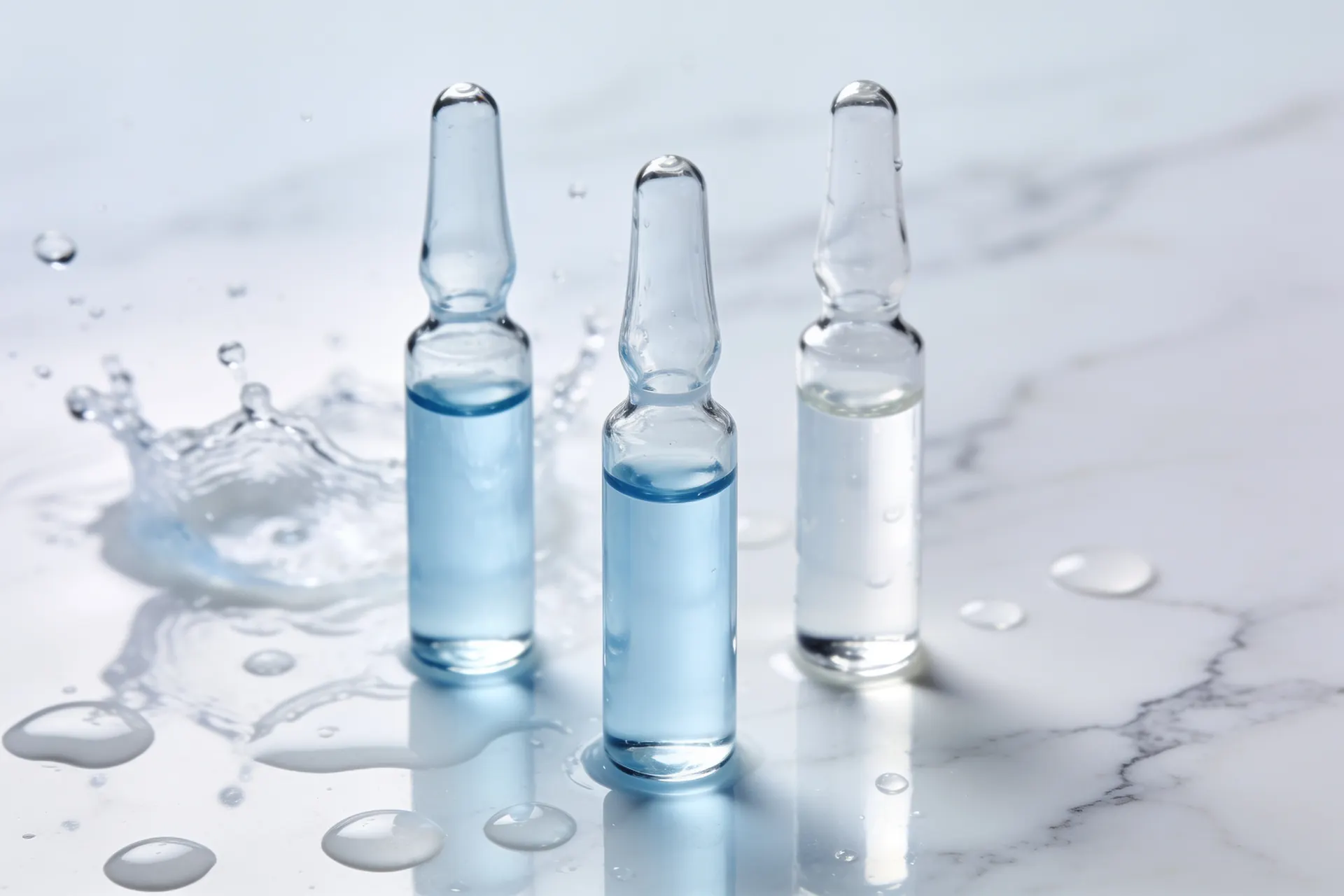
Illustrative image, not a patient.
Where calcium hydroxylapatite matters on this site
CaHA appears wherever this site discusses support on bone rather than volume in soft tissue. Because the microspheres are firm and cannot be dissolved, every page that uses it pairs it with ultrasound mapping and a conservative first placement.
CaHA is chosen for support on bone; if a plan needs something that can be taken back, it is the wrong material.— Dr Sin Yong
Radiesse: the product page, separating undiluted structural work on the chin, jawline and hands from hyperdiluted skin-quality work on the neck and body.
CaHA nose filler: why the bridge and tip are built with a fine needle on the bone, and why CaHA or PCL is usually chosen there over a hyaluronic acid-only product.
4D Scar Reconstruction: CaHA as the support step placed beneath a released acne scar so the floor can rise.
Hand rejuvenation: the backs of the hands, one of the more studied areas for diluted CaHA.
Lumps after non-HA fillers: what is done when a CaHA deposit can be felt or seen, given that hyaluronidase has no action on it.
Regulatory status. Radiesse holds US FDA premarket approval, first granted in December 2006 for facial folds and HIV-associated lipoatrophy. In Singapore, fillers are medical devices regulated by the Health Sciences Authority; the page on how aesthetic medicine is regulated in Singapore explains what can be checked.
Not to be confused with
Several materials are sold with similar promises, and the differences decide what can be undone and how a complication is managed.
Hyaluronic acid filler. A water-binding gel that hyaluronidase can dissolve. CaHA is a mineral suspension that it cannot touch, which is why reversibility is part of the choice between them.
Polycaprolactone (Ellansé). Also microspheres in a carboxymethylcellulose gel, also a collagen response afterwards, but a synthetic polyester rather than a mineral, with its own placement rules.
Poly-L-lactic acid (Sculptra). A reconstituted powder that adds little on the day and works almost entirely through collagen; CaHA gives visible support straight away.
Calcium supplements and bone grafts. The same mineral family in a different form. Oral calcium has no effect on facial support, and the injected microspheres are broken down over time rather than turning into bone.
A clinic offering "Radiesse" may also mean either the undiluted or the hyperdiluted procedure, and it is worth asking which.
What decides whether CaHA matters for you
CaHA is a structural choice, so the assessment is about structure first and product second.
Support or volume? Projection on bone at the chin, jawline or nose suits a firm product; broad deflation across the cheeks is usually better served by a different material, as the collagen biostimulators page sets out.
Skin thickness. A firm product placed under thin, mobile skin can be seen, so it is kept deep and away from those areas.
What is already there. Earlier filler or biostimulator is mapped with ultrasound before anything is added, because CaHA stacked on unknown product cannot be taken back.
Which procedure. Undiluted structure and hyperdiluted skin quality are two different plans, and Dr Sin Yong does not mix them in one appointment without a reason.
Reversibility. In the nose, where vascular risk is highest, some patients prefer a dissolvable product; the nose fillers guide explains that trade-off.
Where laxity rather than support is the real complaint, he says so and points to an energy-based lift instead.
Dr Sin Yong prefers energy-based treatment for almost every concern that injectables are used for: FSX Laser for the skin, and the VF Lift for lifting and hollow areas. It adds no product, so there is no injected material to cause pillow face, migration or lumps. Where an injectable is the right choice, he says so and explains why.
CaHA is the firmest of the three collagen biostimulators Dr Sin Yong uses and the one with the most immediate effect, which is why it is chosen where support rather than diffuse volume is wanted. The Radiesse page covers both forms. In acne scar work it is the filler support step of his 4D Scar Reconstruction, placed beneath a released scar so the floor can rise; the pairing is described on subcision with filler. For nose refinement he usually chooses CaHA or PCL rather than a hyaluronic acid-only product. As with the other non-HA materials, nothing here dissolves, so ultrasound mapping and a conservative plan come first; the wider class is defined under biostimulator.
Related on this site
Why lumps can form after it, and how they are managed, is covered in Radiesse lumps.
Because it is firmer and holds projection on the bone with less spread, so a small amount placed with a fine needle on the bone can shape the bridge or tip. The trade-off is that hyaluronidase cannot dissolve it. Where a patient wants the option of reversal, a hyaluronic acid product is discussed instead. In either case the nose is treated as a high-risk vascular area, and the plan is made after examination.
The product is the same; the dilution changes the procedure. Undiluted or lightly diluted, it is placed deep and sparingly where structure is needed, such as the chin or jawline. Hyperdiluted, it is spread thinly in the superficial plane across an area such as the neck or the backs of the hands to improve skin quality rather than add volume. They are planned as two separate treatments.
Both, depending on how it is used. Undiluted, the gel and microspheres fill on the day and collagen forms afterwards; diluted with saline or lidocaine, the volume effect is slight and it is used for skin quality.
Not by hyaluronidase, which acts only on hyaluronic acid. Intralesional sodium thiosulfate has been reported for CaHA nodules; it is a management option, not an equivalent of dissolving.
References
Kadouch JA. Calcium hydroxylapatite: a review on safety and complications. J Cosmet Dermatol. 2017;16(2):152-161. doi:10.1111/jocd.12326. source
Wollina U, Goldman A. Spontaneous and induced degradation of dermal fillers: a review. J Cutan Aesthet Surg. 2024;17(4):273-281. doi:10.4103/JCAS.JCAS_137_23. source
Radiesse — Premarket Approval P050037. U.S. FDA Premarket Approval database. www.accessdata.fda.gov
Rheological properties of calcium hydroxylapatite and hyaluronic acid fillers. Journal of Drugs in Dermatology (PubMed), 2010. pubmed.ncbi.nlm.nih.gov
Efficacy and Safety of Calcium Hydroxylapatite for Nasal Augmentation: A 12-Month Prospective Study in a Chinese Population. PubMed. pubmed.ncbi.nlm.nih.gov
Foreign Body Granulomas Reaction Related to Collagen Stimulatory Cosmetic Fillers: A Systematic Review. Journal of Cosmetic Dermatology (PubMed). pubmed.ncbi.nlm.nih.gov