Published 26 October 2026 · Reviewed by Dr Sin Yong
After hyaluronidase, the enzyme used to dissolve hyaluronic acid filler, some swelling, redness, itch and bruising are expected, and the area can look uneven while it settles. This guide explains what is normal in the first 72 hours, why the result is first assessed at about 48 hours, which signs need urgent help, and when filler can be considered again.
Short answerAfter filler dissolving, swelling, redness, itch and small bruises at the injection points are common and usually settle over the following days. The enzyme keeps acting after the visit and the injections add swelling, so the area can look uneven at first; lips often look lopsided before they settle. The result is first assessed at the review at about 48 hours, when any further dose is decided (King 2018). Spreading swelling or hives need a call to the clinic; breathing difficulty means calling 995. Refilling waits at least two weeks, until swelling has settled (Murray 2021).
Swelling, redness, itch and bruising: what is normal in the first 72 hours
Hyaluronidase is injected in a small amount of fluid through a fine needle, and the tissue reacts to both the injections and the enzyme. In the first 24 to 72 hours, these are expected:
Swelling. The area can look puffier than before, at first because of the fluid that carries the enzyme and then from the reaction to the injections. It is often more noticeable on waking.
Redness and small raised marks at the injection points, which fade.
Itch or warmth where the enzyme was placed, usually mild and confined to the treated area.
Bruising. Small bruises at the injection points are common and fade over the following days, changing from purple to yellow-green.
Tenderness or firmness when the area is touched.
An uneven look while the swelling settles at different rates on each side.
What these have in common is that they stay within the treated area and settle rather than worsen. Swelling or itching that spreads, hives, or redness and pain that increase after the first day or two are not part of normal aftercare; they are covered under warning signs below.
Day by day after filler dissolving
Everyone settles at a different pace, and the lips and the skin under the eyes tend to swell more than the cheeks, chin or jaw. As a rough guide:
Swipe sideways to see the whole table.
When
What you may notice
What to do
The day of treatment
Puffiness from the injected fluid, redness and small raised marks at the injection points, mild itch or warmth
Leave the area alone; hold a cool compress, wrapped in a clean cloth, lightly against it for short spells; no massage unless you were told to
The next day
Swelling may look more noticeable, especially on waking; small bruises can appear; the area can look uneven or lopsided
Keep the injection points clean; sleep with your head raised; for the first day or two avoid heat, alcohol and hard exercise; do not judge the shape yet
About 48 hours
Swelling beginning to settle; the change from the enzyme becoming easier to see
The review: what remains is assessed and any further dose is decided
Days 3 to 7
Bruises fading; the shape becoming clearer, although one side may settle sooner than the other
Your usual routine, as advised; contact the clinic if anything is getting worse instead of settling
From two weeks
Swelling usually settled, so the area can be judged as it now is
If you still want filler, refilling can be discussed now (Murray 2021)
At any time
Breathing difficulty or swelling of the face or throat that is spreading; hives or swelling beyond the treated area; redness, heat, pain or pus that increases
Breathing difficulty or spreading face or throat swelling: call 995. Any of the others: contact the clinic straight away
If a further dose is given at the review, the same pattern starts again from that dose. The written instructions you are given on the day take priority over this guide.
“Dissolving filler is not an undo button.”
Dr Sin YongOn what dissolving can and cannot do
Why the result is first assessed at about 48 hours
Hyaluronidase starts to break down hyaluronic acid soon after it is injected and keeps acting for a while afterwards. On the day, the fluid that carries the enzyme and the reaction to the injections add swelling, which can hide how much filler has gone or even make the area look fuller than before. By about 48 hours the enzyme has had time to act and the swelling has begun to settle, so what remains can be judged with more confidence. Any further dose is decided at this review and titrated to what remains (King 2018).
What happens at the review
The area is examined at rest and in movement, and compared with the photographs taken before treatment.
Where it helps, it is scanned again with ultrasound to show whether filler remains and where.
You are asked about itch, swelling or any reaction since the injections.
One of three things is then agreed: no further dose, a further small dose into what remains, or more time, because swelling still hides the result.
So the question of how long hyaluronidase takes to work is answered at the review, not in the mirror on the first evening.
How the area can look in stages
Dissolving rarely changes an area evenly or all at once. The swelling from the injections, the enzyme working through the filler, and the shape of the tissue underneath all show at different times.
Lips
On the first day, lips can look swollen, lumpy or lopsided, sometimes fuller than before the injections. Over the next days the swelling settles, often one side before the other, and the shape becomes clearer. Lips that have carried filler for a long time can look different from how you remember them before filler, and that is discussed at the review rather than judged on the first day. More on lips is in lip filler dissolving.
Under the eyes
The skin under the eyes is thin and swells easily, so puffiness in the first days can look like filler that is still there. The area is judged at the review, once that swelling has begun to settle; see under-eye filler dissolving.
Cheeks, chin, jaw and nose
Filler in these areas is often firmer, and hyaluronic acid products differ in how easily the enzyme breaks them down (Landau 2015). The change can therefore come in steps, sometimes over more than one dose, rather than all at once. See chin and jaw filler dissolving and nose filler dissolving.
Several areas, or a face that was overfilled
Where a lot of filler has built up, it is usually dissolved area by area, with a review between steps, so the face changes gradually and the balance between areas can be judged as it goes. See pillow face.
Aftercare: what helps and what to avoid
Aftercare after filler dissolving is mostly about leaving the area alone and giving the swelling time. Simple measures help. Follow the advice you were given, which takes priority over this list.
What helps
A cool compress, wrapped in a clean cloth and held lightly against the area for short spells. Do not press hard, and do not put ice directly on the skin.
Sleeping with your head raised on an extra pillow for the first nights, and not on the treated side.
Keeping the injection points clean: rinse gently with lukewarm water and a mild cleanser, and pat dry.
Photographs in the same light each day, if you want to follow the change, to bring to the review.
Keeping your review appointment, even if the area already looks settled.
What to avoid
Pressing, rubbing or massaging the area, unless you were told to.
Heat for the first day or two: saunas, steam rooms, hot yoga and very hot showers on the face.
Alcohol and hard exercise for the first day or two.
Make-up over the injection points on the first day.
Facials, facial massage, gua sha, at-home devices and energy-based treatments over the area until it has been reviewed.
New filler in or near the area until refilling has been discussed, no sooner than two weeks.
Starting a medicine or cream for itch or swelling without asking the clinic first.
If you are prone to cold sores and the lips were treated, let the clinic know if one starts.
Hyaluronidase side effects and warning signs
Most side effects of hyaluronidase are local and settle on their own:
Swelling, redness, itch, tenderness or bruising at the injection points.
An uneven look while the swelling settles.
Breakdown of some of the skin's own hyaluronic acid near the injection site, which the body replaces.
Over-correction: a hollow, if more filler is dissolved than was in excess (see below).
Allergic reaction: uncommon, usually local swelling and itch, rarely more serious.
Infection, which is uncommon after any injection.
Like any medical treatment, dissolving has its own risks and limits. These are the signs that need action.
Allergic reaction
An allergic reaction can begin soon after the injection or appear later, sometimes a day or more afterwards. Signs include swelling or itching that extends beyond the treated area or keeps increasing, and hives (raised, itchy welts) on the face or body. Contact the clinic straight away for any of these, or, if you cannot reach the clinic, see a doctor or go to A&E the same day. A systematic review of 37 studies describing 106 patients with hyaluronidase allergy found that previous hyaluronidase injections and sensitisation from insect or wasp stings were the main risk factors, that many reactions happened at a second injection, and that the reactions responded to treatment (Guliyeva 2024).
Allergic reaction: breathing difficulty, a tight throat, or swelling of the face, lips, tongue or throat that is spreading means calling 995 now. Call first, and let the clinic know afterwards.
Infection
Signs of infection include redness, warmth, pain or swelling that increases after the first day or two instead of settling, pus or discharge from an injection point, a lump that becomes red, hot or tender, and fever or feeling unwell. Contact the clinic the same day. A red, hot or tender lump is treated medically first. A lump that appears weeks or months after filler can also be a delayed inflammatory nodule, which needs medical assessment (Convery 2021).
A blocked blood vessel
These signs relate to filler rather than to the enzyme, but they apply whenever filler has been injected recently or is added again later.
Urgent: a change in vision or eye pain after filler means calling 995 or going to the nearest emergency department now. Skin that turns pale, dusky or mottled, or pain that is getting worse, needs urgent assessment by the doctor who injected you, or at A&E. See the warning signs of a blocked blood vessel after filler.
When a second dose is considered
A second dose is not decided on the day. It is considered at the review, once the first dose has had time to act and the swelling no longer hides the result, and only where filler you still want to reduce remains.
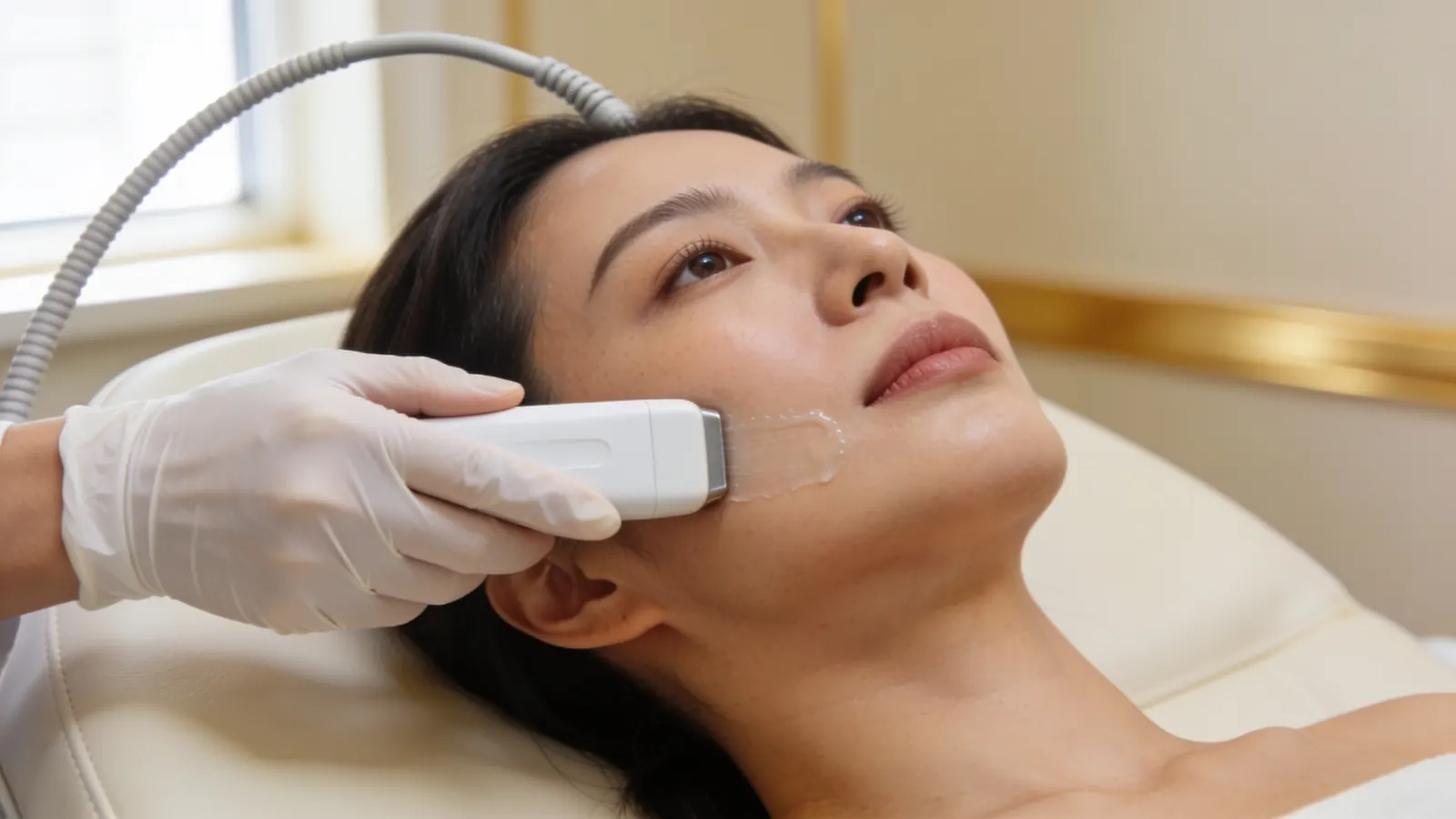
Illustrative image — not a patient.
When it is considered
Filler is still present, and the examination or scan shows where.
The remaining filler, rather than swelling that is settling, is still what bothers you.
There was no allergic reaction to the first dose.
When it is not
The area already looks as intended, or swelling still makes it hard to judge.
Any reaction to the first dose, even a mild one, has not yet been assessed.
There are signs of infection.
What remains is not hyaluronic acid, which the enzyme does not act on.
Hyaluronic acid products differ in how easily the enzyme breaks them down (Landau 2015), so firmer fillers, such as those used in the chin, jaw and cheeks, can need more of it, and guidance advises titrating to effect rather than giving a set number of units (King 2018; Murray 2021). Under ultrasound guidance, a further dose can be injected directly into the filler that remains (Schelke 2018). Because many allergic reactions happen at a second injection (Guliyeva 2024), tell the doctor about any itch, rash or swelling after the first dose before more is given.
If an area has not changed after dissolving, the filler may not be hyaluronic acid, or the enzyme may not have reached it; see when filler dissolving has not worked. For nodules large and small made of collagen stimulators, which cannot be dissolved, Dr Sin Yong uses the Sculpting mode of Time Freeze Laser LCLR®, without an incision; how each person responds varies.
If the area looks hollower than expected
Sometimes an area looks flatter or hollower once the swelling has gone. There are two common reasons. More filler may have been dissolved than was in excess, because the enzyme spreads a little within the tissue and breaks down any hyaluronic acid filler it reaches. Or the filler may have been hiding a hollow, loose skin or volume loss that is still there.
Small first doses placed into mapped filler, with a review before any more, are designed to lower the risk of over-correction. The enzyme can also break down some of the skin's own hyaluronic acid near the injection site, but the body replaces its own hyaluronic acid continuously, so this is not a lasting loss.
Judge a hollow once the swelling has settled, not in the first days, when swelling can hide it. If it is still there, the options are discussed then: leaving the area as it is, treating the skin, or a small amount of filler placed precisely, no sooner than two weeks after hyaluronidase (Murray 2021).
When can filler be added again?
Not on the same day, and not at the review. Published guidance recommends waiting at least two weeks after hyaluronidase, until the swelling has settled, before any refilling (Murray 2021). Until then, swelling can make an area look fuller or more even than it is, and filler added against that swelling can look different once it settles.
Whether to replace any filler is decided at that point, and sometimes the answer is to leave the area as it is. Where filler is wanted, it is usually planned as a smaller amount, placed precisely, and checked again once settled. If filler had built up over years, it is worth living with the new baseline for a while before deciding. Aftercare after new filler is set out in dermal filler aftercare.
How Dr Sin Yong follows up after filler dissolving
Dr Sin Yong performs the scan and places the enzyme himself, and he reviews the area himself at about 48 hours. You leave with written aftercare, which takes priority over this guide, and the clinic is your point of contact for questions in the days after treatment. The plan for what comes next, including the option of no further treatment, is set out in writing.
If you had filler dissolved elsewhere and are not sure whether what you see is normal, it can be assessed in the same way. How dissolving itself is planned is covered in filler dissolving in Singapore, and whether filler can simply be left to go on its own is covered in how to dissolve filler naturally.
Your next step
1. MessageWhatsApp +65 8023 7170 with what is bothering you. A reply comes from the clinic, not a bot.
2. AssessmentDr Sin Yong examines you himself on Orchard Road, with ultrasound where earlier filler is involved.
3. A plan in writingWhat he would do, what he would not, the fee factors, and the option of no treatment.
Every treatment is performed by Dr Sin Yong personally. Singapore Medical Council registered · invited to share his clinical expertise internationally for CLASSYS, DEKA, Fotona, Hironic and Ilooda.
Book a review after filler dissolving with Dr Sin Yong on Orchard Road. How consultations work.
Swelling, redness, mild itch and small bruises at the injection points are common in the first 24 to 72 hours, and the area can look uneven while it settles. The enzyme keeps acting after the visit, so the result is first assessed at the review at about 48 hours rather than on the day, and the settled shape can take up to two weeks to show. Swelling that spreads or hives need a call to the clinic; breathing difficulty means calling 995.
It varies with the area and the person. Swelling from the injections is often most noticeable on the day and the morning after, and usually settles over the following days, sooner in the cheeks and chin than in the lips or under the eyes. Swelling that increases after the first day or two, spreads beyond the treated area or comes with hives needs a call to the clinic straight away.
It starts to break down hyaluronic acid soon after it is injected and keeps acting for a while afterwards. Because the injections themselves cause swelling, the change is easier to judge at the review at about 48 hours than on the day, and any further dose is decided then (King 2018). Firmer fillers can need more than one dose, so the change can come in steps.
Lips swell easily, and the swelling rarely settles evenly, so one side can look fuller or lumpier for the first days. The enzyme may also have reached one part of the filler more than another. Lips are judged at the review at about 48 hours, once the swelling has begun to settle, and any further dose is aimed at filler that remains rather than at swelling.
Yes. Small bruises at the injection points are common, especially in the lips and under the eyes, and they fade over the following days, changing from purple to yellow-green. A cool compress, wrapped in a cloth and held lightly, can ease tenderness. Make-up can usually go over intact skin from the next day. A bruise that keeps growing, or skin that turns pale, dusky or mottled, needs urgent assessment.
The common effects are swelling, redness, itch, tenderness and bruising at the injection points, which settle. Less often, more filler is dissolved than intended and the area looks hollow, which staged dosing aims to avoid. Allergic reactions are uncommon; previous hyaluronidase injections and sensitisation from insect or wasp stings are the main risk factors (Guliyeva 2024). The enzyme has no effect on fillers that are not hyaluronic acid.
No sooner than two weeks after hyaluronidase, and only once the swelling has settled, as published guidance recommends (Murray 2021). Until then, swelling can make an area look fuller or more even than it is. Whether to add any filler is decided at that point; often the answer is a smaller amount placed precisely, and sometimes no new filler at all.
Sometimes. It depends on how much filler there was, how firm it is and how it responded to the first dose. A second dose is decided at the review at about 48 hours, not on the day, and placed into the filler that remains. Mention any itch, rash or swelling after the first dose before more is given, because many allergic reactions happen at a second injection (Guliyeva 2024).
Only if the doctor who treated you advised it. Otherwise, leave the area alone: pressing or rubbing freshly injected tissue can add to swelling and bruising, and it makes the area harder to judge at the review. A cool compress, held lightly, is fine for comfort. Facials, facial massage and at-home devices over the area are avoided until it has been reviewed.
Swelling or itching that extends beyond the treated area or keeps increasing, and hives on the face or body. A reaction can start soon after the injection or later, sometimes a day or more afterwards. Contact the clinic straight away for these. Breathing difficulty, a tight throat, or swelling of the face, lips, tongue or throat that is spreading means calling 995 now.
It can, if more filler is dissolved than was in excess, or if the filler was hiding a hollow or loose skin that is still there. That is why small doses are placed into mapped filler and reviewed before any more is used. Judge the area once the swelling has settled. If a hollow remains, the options are discussed then, including leaving it, treating the skin, or a small amount of filler after at least two weeks.
For the first day or two, avoid alcohol, hard exercise and heat, such as saunas, steam and very hot showers on the face, because they can add to swelling and bruising. Avoid make-up over the injection points on the first day. Light activity such as walking is usually fine from the next day, and your usual routine can resume as the swelling settles, following the written advice you were given.
References
The Use of Hyaluronidase in Aesthetic Practice (v2.4). Journal of Clinical and Aesthetic Dermatology, 2018. source
Guideline for the Safe Use of Hyaluronidase in Aesthetic Medicine, Including Modified High-dose Protocol. Journal of Clinical and Aesthetic Dermatology, 2021. source
Hyaluronidase Caveats in Treating Filler Complications. Dermatologic Surgery, 2015. source
Allergic Complications of Hyaluronidase Injection: Risk Factors, Treatment Strategies, and Recommendations for Management. Aesthetic Plastic Surgery, 2024. source
Ultrasound to improve the safety of hyaluronic acid filler treatments. Journal of Cosmetic Dermatology, 2018. source
Delayed-onset Nodules (DONs) and Considering their Treatment following use of Hyaluronic Acid (HA) Fillers. Journal of Clinical and Aesthetic Dermatology, 2021. source
About this page: written and medically reviewed by Dr Sin Yong, MBBS (NUS), MRCS (Edinburgh) · Last reviewed 26 October 2026 · Illustrative images only, not patients · Editorial policy