Published 12 November 2026 · Reviewed by Dr Sin Yong
Laser resurfacing is a group of laser treatments that renew the skin surface and the collagen beneath it, used for acne scars, lines, sun damage and rough texture. The lasers fall into two families. Ablative lasers remove tissue. Non-ablative lasers heat it and leave the surface intact. Either can be delivered as a fractional pattern, and the choice sets both the recovery and the risk.
Short answerLaser resurfacing treatment uses a laser to renew damaged skin. Ablative lasers, such as CO2 and erbium:YAG, vaporise thin columns or layers of skin and need more healing. Non-ablative lasers, such as 1540 nm, heat the dermis without removing the surface and heal faster, with a gentler effect per visit. In Asian skin the main risk is darkening afterwards. Dr Sin Yong uses fractional CO2 on the DEKA Tetra Pro and a 1540 nm non-ablative laser, chosen after examining the skin on Orchard Road, Singapore.
Laser resurfacing treatment uses laser energy to injure the skin in a controlled way so that it heals with new surface cells and remodelled collagen. The wavelengths used are absorbed by the water in skin, which is why they act on texture and scars and not on pigment or blood vessels.
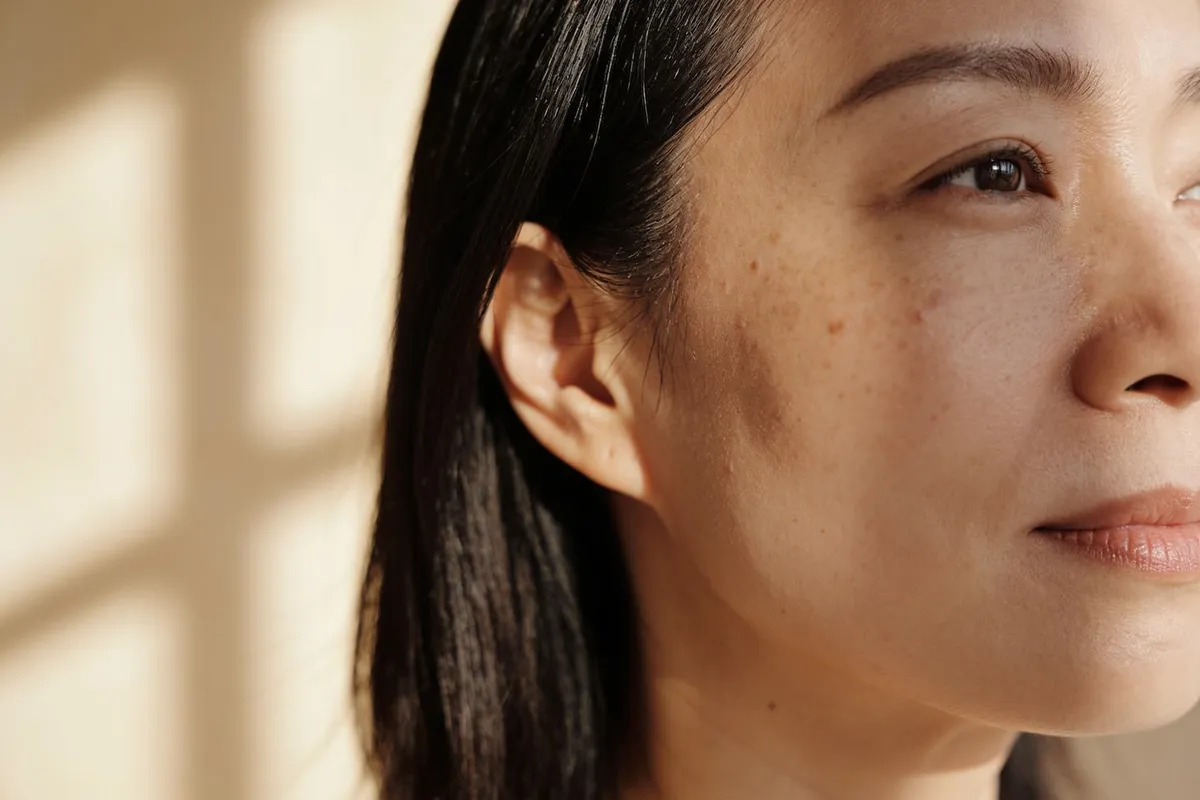
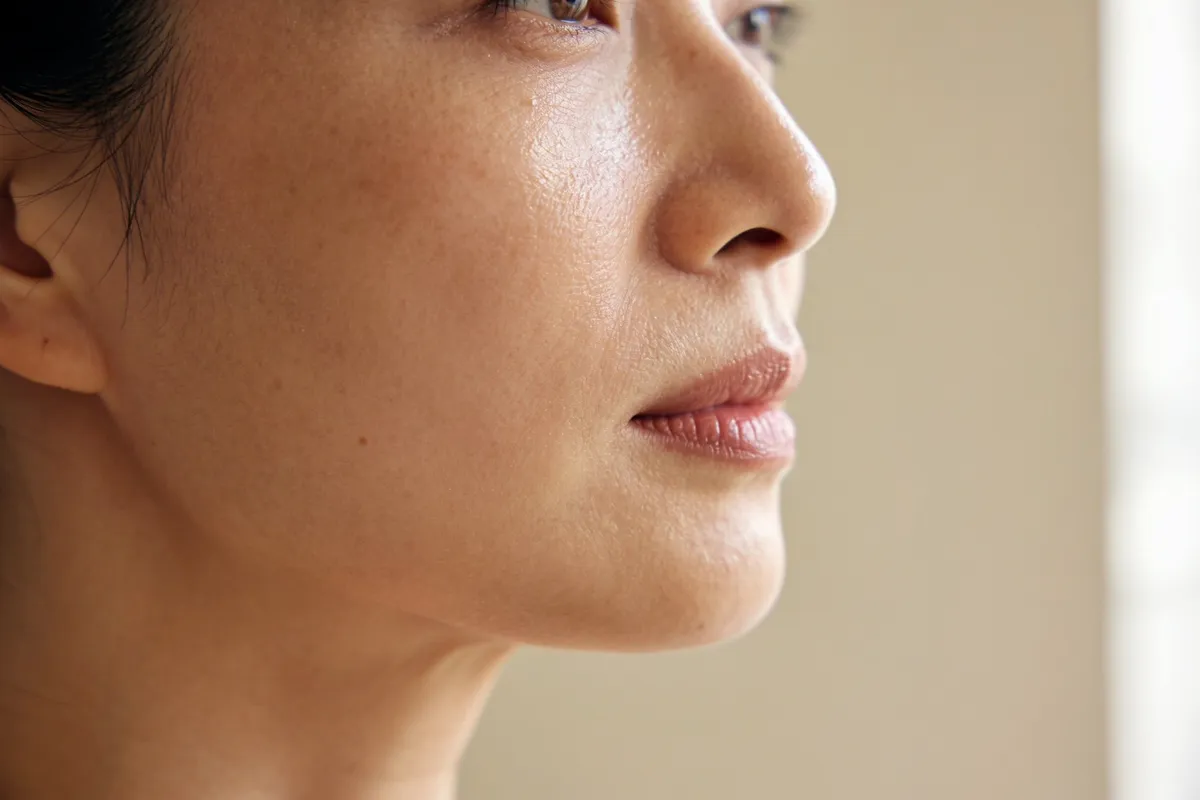
Side light shows the depth and shape of acne scars. Illustrative image, not a patient.
It is used for acne scars, surgical and injury scars, fine and deeper lines, sun-damaged skin, enlarged pores and uneven texture. It is not a treatment for sagging, which is a problem of deeper layers.
Ablative vs non-ablative laser: what is the difference?
The difference is whether skin is removed. An ablative laser vaporises tissue, leaving tiny open channels or, in full-field treatment, a raw surface that must heal over. A non-ablative laser heats columns of the dermis to trigger collagen repair while the outer layer stays in place.
Hands and neck get as much sun as the face. Illustrative image, not a patient.
Swipe sideways to see the whole table.
Ablative fractional
Non-ablative fractional
Full-field ablative
Examples
Fractional CO2, fractional erbium:YAG
1540 nm, 1550 nm, 1927 nm
Traditional CO2 or erbium:YAG resurfacing
What happens to the skin
Microscopic columns are vaporised; skin between them is spared
Columns of dermis are heated; the surface stays intact
The whole surface layer is removed
Healing
Redness, swelling, pinpoint crusts that shed, then pinkness that fades
Redness and swelling that settle sooner; no open wound
The longest healing, with an open surface that needs wound care
Does laser resurfacing work? What published trials show
Most trial evidence for laser resurfacing comes from acne scar studies. A 2023 network meta-analysis of six energy-based treatments concluded that fractional CO2 laser, an ablative method, remains the mainstream choice for efficacy, and that non-ablative fractional laser suits mild to moderate improvement because it is better tolerated. Fractional CO2 laser also carried the highest probability of darkening afterwards among the six.
The Cochrane review of acne scar treatment included 24 trials with 789 adults and rated most of the evidence as low quality. The trade-off the trials describe, more effect with more recovery and more pigment risk, is the same one set out in the comparison on this page, and it is weighed against skin type before a method is chosen.
Laser skin resurfacing recovery time: what to expect
Recovery depends on the type of laser and how densely it is used, so one number does not fit everyone.
Scar type is identified before a method is chosen. Illustrative image, not a patient.
After a non-ablative fractional laser, the skin is red and a little swollen, then feels dry or rough for a few days as it renews. There is no open wound.
After a fractional CO2 laser, the skin is red, warm and swollen at first. Pinpoint crusts form in a grid pattern and shed over the following days, leaving pink skin that fades more slowly. Make-up and sun exposure are held back until the surface has closed.
The stages are set out day by day in the CO2 laser aftercare guide and under CO2 laser downtime. Full-field ablative resurfacing takes considerably longer.
What are the risks, especially in Asian skin?
The risk that matters most in Singapore is darkening after inflammation, because Asian skin makes pigment readily after injury. It usually fades, but it can take months, and it is more likely after strong settings, sun exposure or picking at crusts.
Daily sunscreen is part of any laser plan. Illustrative image, not a patient.
Other risks are prolonged redness, acne or milia during healing, a cold sore flare in people who carry the virus, infection, lighter patches and, rarely, scarring. People with a tendency to keloids, recent isotretinoin use, an active skin infection or a recent tan need a doctor's decision before any resurfacing.
Which type of laser resurfacing suits which problem?
The scar or the texture decides, not the machine. Deeper, sharper-edged scars generally need ablative energy or a different method altogether; shallow unevenness and early lines may be addressed without ablation.
Skin quality is assessed in natural light. Illustrative image, not a patient.
Tethered rolling scars are released first with subcision, and narrow ice pick scars are treated one by one, because no surface laser reaches their base. Where needles suit better than light, RF microneedling is considered. The full sequence is on the acne scar treatment page.
How Dr Sin Yong approaches laser resurfacing
He examines the skin under angled light, maps the scar types and asks about pigment history, sun exposure, medicines and past procedures. For scars he works within his own protocols, described under laser acne scar treatment, on the DEKA Tetra Pro fractional CO2 laser. He is a Global Key Opinion Leader for DEKA, the maker of the Tetra Pro.
The plan follows what the skin shows on the day. Illustrative image, not a patient.
He performs every laser treatment himself on Orchard Road, Singapore, and reviews the skin before deciding on anything further. The plan, including the option of no treatment, is set out in writing.
Your next step
1. MessageWhatsApp the clinic with what is bothering you. A reply comes from the clinic, not a bot.
2. AssessmentDr Sin Yong examines you himself on Orchard Road, Singapore.
3. A plan in writingWhat he would do, what he would not, the fee factors, and the option of no treatment.
Every treatment is performed by Dr Sin Yong personally. Singapore Medical Council registered · invited to share his clinical expertise internationally for CLASSYS, DEKA, Fotona, Hironic and Ilooda.
Resurfacing is planned from an examination of the scars or texture and the skin's pigment history. How consultations work.
Acne scars aren't just one thing. If someone offers you one treatment for your acne scars, they haven't looked closely enough. There are narrow deep ones, shallow ones, and some that are tethered down by scar tissue underneath. They sit side by side on the same cheek, and none of them respond the same way. A real plan combines methods over time. One device for every scar is the clearest sign you are in the wrong room.
Transcript of Dr Sin Yong's video, lightly edited for reading.
When to see a doctor before and after laser resurfacing
Before resurfacing, tell the doctor about recent isotretinoin, a history of keloids or cold sores, pregnancy and any active skin infection, since each changes whether and when the laser is used.
After treatment, redness that spreads, pus, fever, blistering or pain that increases after the second day should be seen by the treating doctor promptly. Darkening of the treated skin in the weeks afterwards should also be reviewed early.
Frequently Asked Questions
The cost depends on the laser, the area and the number of sessions. Dr Sin Yong confirms the fee after examining the skin.
The collagen changes last for years, though ageing continues. Acne scar improvement tends to hold.
Yes, many types can. The laser is chosen by the type of pigment, and melasma needs gentle settings.
Laser resurfacing treatment uses laser energy to renew the skin surface and stimulate new collagen beneath it. It is used for acne scars, other scars, lines, sun damage and uneven texture. The laser may be ablative, which removes tissue, or non-ablative, which heats it and leaves the surface intact.
An ablative laser, such as CO2 or erbium:YAG, vaporises skin tissue and needs more healing. A non-ablative laser, such as 1540 nm, heats the dermis without removing the surface, so healing is quicker and the effect per visit is gentler. Both can be delivered in a fractional pattern.
It depends on the laser. Non-ablative fractional treatment leaves redness and swelling that settle within days, with no open wound. Fractional CO2 leaves pinpoint crusts that shed over the following days and pinkness that fades more slowly. Full-field ablative resurfacing takes considerably longer.
It can be used in Asian skin with care. The main risk is darkening after inflammation, which is reduced by conservative settings, preparation of the skin, strict sun protection and review between visits. Fractional treatment is preferred to full-field ablation in darker skin types.
No. Fractional describes the pattern of delivery, as microscopic columns with untreated skin between them. CO2 describes the type of laser. A CO2 laser can be fractional, and so can non-ablative lasers.
Dr Sin Yong uses fractional CO2 on the DEKA Tetra Pro and a 1540 nm non-ablative fractional laser on the Secret DUO, on Orchard Road, Singapore. The choice follows an examination of the scars or texture and the skin's pigment history.
Acne scars, uneven texture, fine lines, enlarged pores and sun damage. The laser and depth are chosen for the problem and skin type.
Non-ablative resurfacing: one to three days of redness. Fractional ablative CO2: about five to seven days of redness and flaking.
Ablative lasers such as CO2 and erbium, and non-ablative fractional lasers.
Avoid tanning, pause retinoids if advised, and tell your doctor about cold sores.
Ablative lasers remove thin layers of skin; non-ablative lasers heat below the surface; pigment and hair-removal lasers target colour.
Acne scars, fine lines, uneven texture, enlarged pores and some pigmentation.
The skin is cleansed and numbed, then treated in passes; it takes about 20 to 60 minutes.
Gentle cleansing, moisturiser, strict sun protection, and no picking at flaking skin.
One to three for ablative, three to five for non-ablative treatments.
Yes, often with subcision, RF microneedling or pigment lasers in a planned sequence.
References
Manstein D, Herron GS, Sink RK, Tanner H, Anderson RR. Fractional photothermolysis: a new concept for cutaneous remodeling using microscopic patterns of thermal injury.
Wang Y, Sun Z, Cai L, Zhang F. Comparative efficacy and safety of six photoelectric therapies for the atrophic acne scars: A network meta-analysis. Indian Journal of Dermatology, Venereology and Leprology, 2023. doi.org
Abdel Hay R, Shalaby K, Zaher H, Hafez V, Chi CC, Dimitri S, et al. Interventions for acne scars. The Cochrane Database of Systematic Reviews, 2016. doi.org
About this page: written and medically reviewed by Dr Sin Yong, MBBS (NUS), MRCS (Edinburgh) · Last reviewed 12 November 2026 · Illustrative images only, not patients · Editorial policy