Published 31 October 2026 · Reviewed by Dr Sin Yong
You are likely to be suitable for a Hydrafacial when your skin is congested, dull, oily or dehydrated, or needs maintenance between laser or injectable treatments. Sensitive skin and mild comedonal acne often suit it once the acid step is adjusted. A cold sore, sunburn, a flare of rosacea or eczema, or recent isotretinoin means waiting. A doctor examines the skin first.
Short answerA Hydrafacial cleanses, exfoliates, extracts and infuses serums in the epidermis, the outermost layer of the skin. It maintains skin; it does not treat scars, deep pigment or laxity, so suitability is as much about the concern as the skin. This page sits under Hydrafacial in Singapore.
A Hydrafacial suits skin whose concern sits on the surface. Its spiral-tip handpiece works in three steps: a mild glycolic and salicylic acid solution loosens dead cells and is removed continuously; vortex suction draws blackheads and sebaceous debris from the pores while a hydrating solution is applied; and a serum chosen for the skin is applied to the freshly cleansed surface, sometimes followed by LED light. All three steps work in the epidermis. Nothing is placed in the dermis, as an injected skin booster would be.
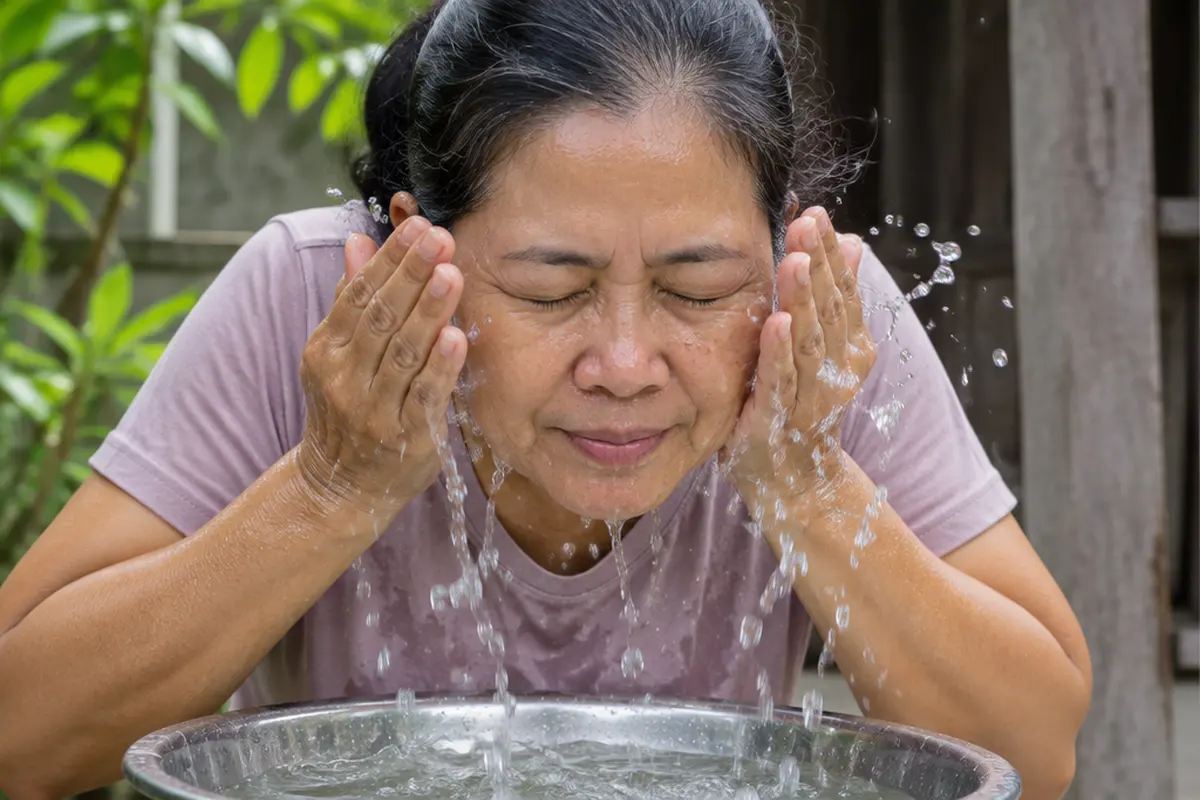
Illustrative image — not a patient.
That makes it a good fit for clogged pores, blackheads and congestion, dull or dehydrated skin, oily skin, preparation before an event, and maintenance between laser or injectable treatments. Because there is no manual squeezing and the acid is applied and removed in a controlled way, it can be adjusted for most skin types, including the darker skin tones common in Singapore, where aggressive laser or peel treatments carry higher risk.
The published evidence fits that surface role. A 2015 split-face randomised study in 23 women found that a 4% acid solution applied with suction left fewer whiteheads and blackheads at the first follow-up than the acid alone. A 2024 imaging study of eight volunteers of Fitzpatrick types II to V saw a smoother outer layer after hydradermabrasion but no visible change in dermal collagen. It conditions the surface; it does not change structure.
Which skin suits a Hydrafacial now, after adjustment, or not at all
Group
Typical situation
What usually happens
Tends to suit
Congested, dull, oily or dehydrated skin; event preparation; routine maintenance; skin between laser or injectable treatments
Assessment, then serums and settings chosen for the skin
Suits after adjustment
Sensitive or reactive skin; men with irritation after shaving; mild comedonal acne
The acid step reduced or left out; extraction adjusted
Better to wait
An active cold sore, skin infection, sunburn or broken skin; a flare of eczema, rosacea or dermatitis; recent isotretinoin or strong retinoid use
The facial deferred until the skin is ready
Ingredients reviewed first
Pregnancy or breastfeeding; known allergy to salicylic acid, glycolic acid or a serum ingredient
The acid step and some serums changed or left out, or the facial not advised
Different plan needed
Inflamed or cystic acne, melasma, deep pigment, scars or laxity; suspected infection or an unclear rash
Medical assessment and a treatment that reaches the concern
People hoping for a lift, a change in deep pigment or scar improvement tend to be disappointed, because a Hydrafacial maintains the skin rather than changing it. Saying so at the assessment is part of deciding suitability.
“A facial maintains the surface of the skin. If your concern is a scar, deep pigment or sagging, the honest answer is a different treatment, not a stronger facial.”
Dr Sin YongOn who suits a Hydrafacial
Who should wait before a Hydrafacial
Most reasons to wait are about the state of the skin on the day rather than the person.
A cold sore, infection, sunburn or broken skin in the area. Suction and acid over broken or inflamed skin add irritation, and cold sores can flare in people prone to them.
A flare of eczema, rosacea or dermatitis. The facial waits until the flare has settled, and the acid step is then often reduced.
Recent isotretinoin or strong retinoids. The skin barrier is more fragile, so timing is agreed at the assessment.
Inflamed or cystic acne. Suction and extraction over inflamed lesions are avoided, and the acne is treated medically first; see acne treatment.
A recent procedure. After more intensive treatments a Hydrafacial can be used as calming support, but timed so that the barrier has recovered.
Pregnancy and breastfeeding are not automatic refusals: the ingredients are reviewed, and the acid step and some serums are changed or left out, or the facial is not advised. Known allergy to salicylic acid, glycolic acid or a serum ingredient is handled the same way.
What is checked before a Hydrafacial is planned
Skin type and concern. Whether the concern is congestion, dullness or dehydration, which a facial reaches, or scars, pigment or laxity, which it does not.
Active conditions. Acne, rosacea, eczema, a cold sore or broken skin on the day.
Medicines and products. Recent isotretinoin, retinoids or prescription skincare; bring a list of what you use.
Recent treatments. Laser, peels or injectables, and when they were done.
Allergies and pregnancy. Salicylic acid, glycolic acid and serum ingredients; pregnancy or breastfeeding.
From that, the acid step is set, reduced or left out, extraction is adjusted, and boosters and serums are chosen after examining the skin rather than from a menu. The written plan states whether a Hydrafacial is advised at all. The visit itself is described on what to expect at a Hydrafacial, and how it compares with other surface treatments on Hydrafacial vs Aquapeel vs microdermabrasion.
If a Hydrafacial is not the right tool: the alternatives
When the concern sits deeper than the epidermis, a facial is the wrong tool, and Dr Sin Yong sets the order of treatment instead.
Gentle cleansing is advised in the first days after skin treatments. Illustrative image, not a patient.
Acne scars are collagen defects in the dermis and need subcision, resurfacing or RF microneedling chosen by depth; see acne scar treatment.
Melasma is driven by hormones, heat and ultraviolet light, and a facial that heats or irritates the skin can aggravate it; it is diagnosed before any device is used, as set out on melasma treatment.
Enlarged pores look clearer after extraction, but their size is set by oil output, skin type and the collagen around the pore; dermal treatments such as RF microneedling are discussed instead.
Sagging is assessed for the VF Lift – Vertical Facelift or for focused ultrasound.
Uneven tone or redness may suit a laser facial such as R2 Glow, after assessment.
Skin that reacts to salon facials may suit a doctor-planned facial such as the LDM ultrasound facial.
Your next step
1. MessageWhatsApp +65 8023 7170 with what is bothering you. A reply comes from the clinic, not a bot.
2. AssessmentDr Sin Yong examines you himself on Orchard Road, with ultrasound where earlier filler is involved.
3. A plan in writingWhat he would do, what he would not, the fee factors, and the option of no treatment.
Every treatment is performed by Dr Sin Yong personally. Singapore Medical Council registered · invited to share his clinical expertise internationally for CLASSYS, DEKA, Fotona, Hironic and Ilooda.
Book an assessment on Orchard Road; bring a list of your skincare products and any recent treatments. How consultations work.
Often, after assessment. There is no manual extraction, the mild acid solution is applied and removed in a controlled way, and hydration is infused straight away, so people who react to conventional facials often tolerate a Hydrafacial. Rosacea, reactive skin and skin recovering from a procedure are assessed first, and the acid step is reduced or left out where the skin needs it.
Mild congestion, blackheads and small comedones are often suitable, and extraction is part of the Hydrafacial. Inflamed, painful or cystic acne is different: suction and extraction over inflamed lesions are avoided, and the acne is treated medically first. Dr Sin Yong assesses the skin before deciding whether a Hydrafacial fits now or later in the plan.
Pregnancy and breastfeeding are not automatic refusals for a Hydrafacial, but the ingredients are reviewed first. The acid step and some serums may be changed or left out, or the facial may not be advised. Tell the clinic before the visit, along with any known allergy to salicylic acid, glycolic acid or a serum ingredient.
A Hydrafacial does not treat melasma, which is a pigment disorder driven by hormones, heat and ultraviolet light. A facial that heats or irritates the skin can aggravate it, so melasma is diagnosed and planned for first. Whether a gentle facial has any supporting place in that plan is decided at assessment, not assumed.
Yes, when it is timed for the skin. Dr Sin Yong uses Hydrafacial as preparation before treatments such as RF microneedling or laser, and as calming, hydrating support after more intensive treatments, timed so that the skin barrier has recovered. Tell the clinic what was done recently and when, so the timing and the acid step can be set.
References
The effect of physically applied alpha hydroxyl acids on the skin pore and comedone. International Journal of Cosmetic Science 37(5), 2015. source
Hydradermabrasion through the lens of Line-Field Confocal Optical Coherence Tomography. Skin Research and Technology 30(4), 2024. source
About this page: written and medically reviewed by Dr Sin Yong, MBBS (NUS), MRCS (Edinburgh) · Last reviewed 6 November 2026 · Illustrative images only, not patients · Editorial policy