Sending photos before your visit: what helps, and what they cannot show
Medically reviewed by Dr Sin Yong · Last reviewed · 3 min read
Before travelling, photographs sent by WhatsApp help plan the right length of consultation and decide whether a visit is likely to be worthwhile. Good photographs are taken in even daylight, without make-up or filters, from the front and both sides, with the same distance each time. They cannot replace examination, so treatment plans and quotes are given only after you have been seen in person.
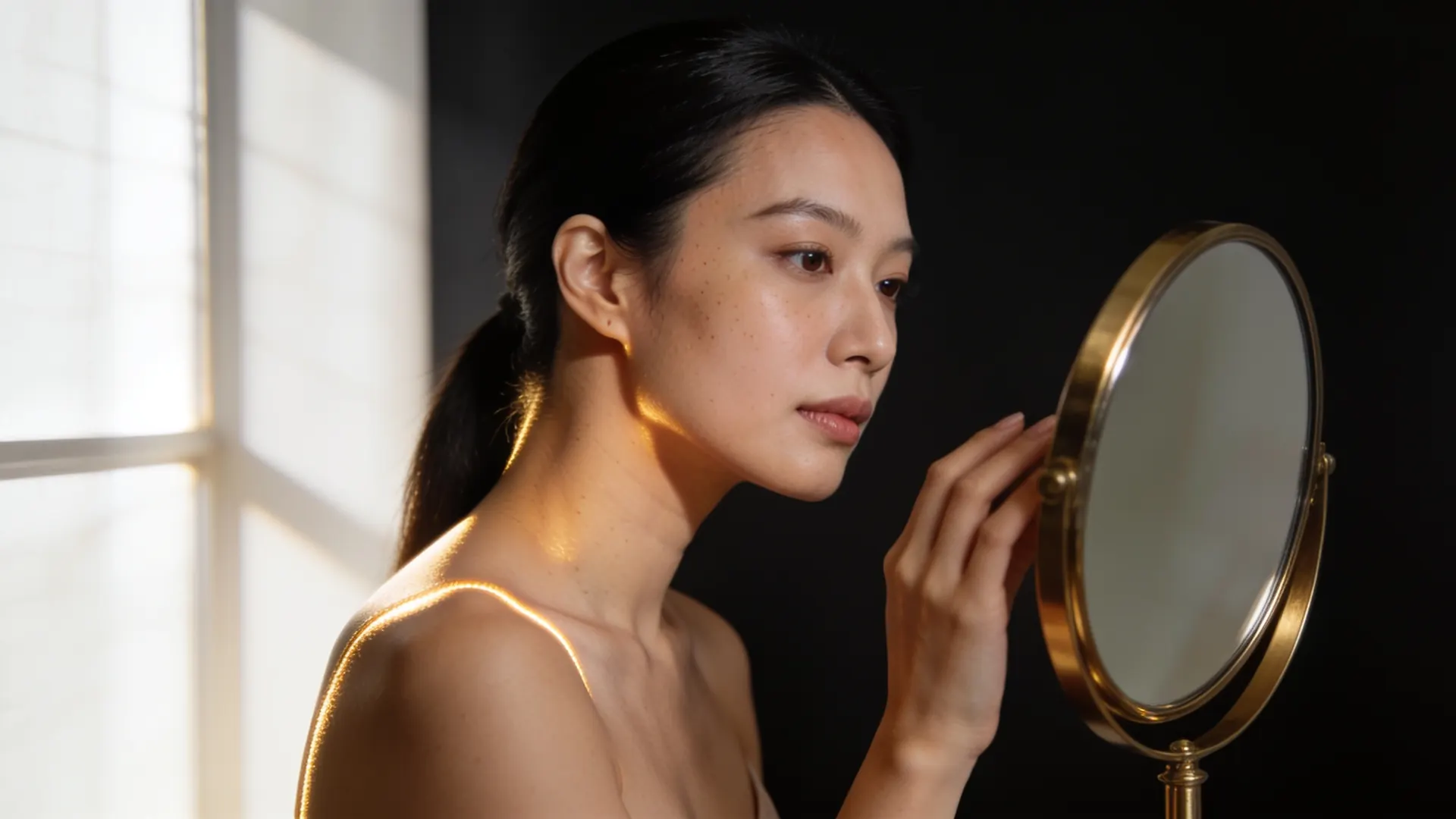
Illustrative image. Side views show contour that front views miss.
Key facts
Light
Facing a window in daylight; no flash, no overhead spotlight
Angles
Front, both sides at 45 degrees and both profiles
Settings
No filters, no beauty mode, no make-up
Distance
Arm’s length or held by someone else; same distance each time
Add
A sentence on how long, what changed and what was tried; your travel dates
Privacy
Photos are used to plan your visit and kept confidentially as part of your record
Stand facing a window in daylight, with nothing behind you that throws colour on the skin. Turn off flash, filters and any beauty mode; many phones smooth skin by default in portrait modes. Remove make-up. Tie hair back if the concern is around the face or jawline. Take a photograph from the front, then from each side at about 45 degrees, then each profile. Keep the phone at the same height and distance.
For a specific mark or lump, add a close-up with something for scale. For anything that changes with expression, add one photograph at rest and one with the expression. For filler concerns, older photographs from before treatment are often the most useful of all.
What to write with them
A few sentences are enough: what concerns you, how long it has been there, what has changed, what has already been done (product names and dates if you have them), any medicines you take, and the dates you can be in Singapore. Send to WhatsApp +65 8023 7170; replies come during clinic hours, Monday to Friday 10am to 8pm and Saturday 11am to 3pm, Singapore time.
What photos can and cannot tell
Photographs help understand the concern, plan the timing of a visit and say in general terms whether a trip makes sense. They cannot show the layer a problem sits in, separate filler from fluid or tissue, diagnose pigment, or replace touch and ultrasound. That is why Singapore’s medical council treats remote contact as a limited form of care, and why plans and quotes follow an in-person assessment.
Frequently Asked Questions
Photos help plan the visit; they cannot replace examination, so plans and quotes are given after an in-person assessment.
No. Make-up, filters and beauty modes hide exactly what needs to be seen.
Front, both sides at about 45 degrees and both profiles, in even daylight.
References
SMC Ethical Code and Ethical Guidelines (2016 Edition), section A6 Telemedicine. Singapore Medical Council. source