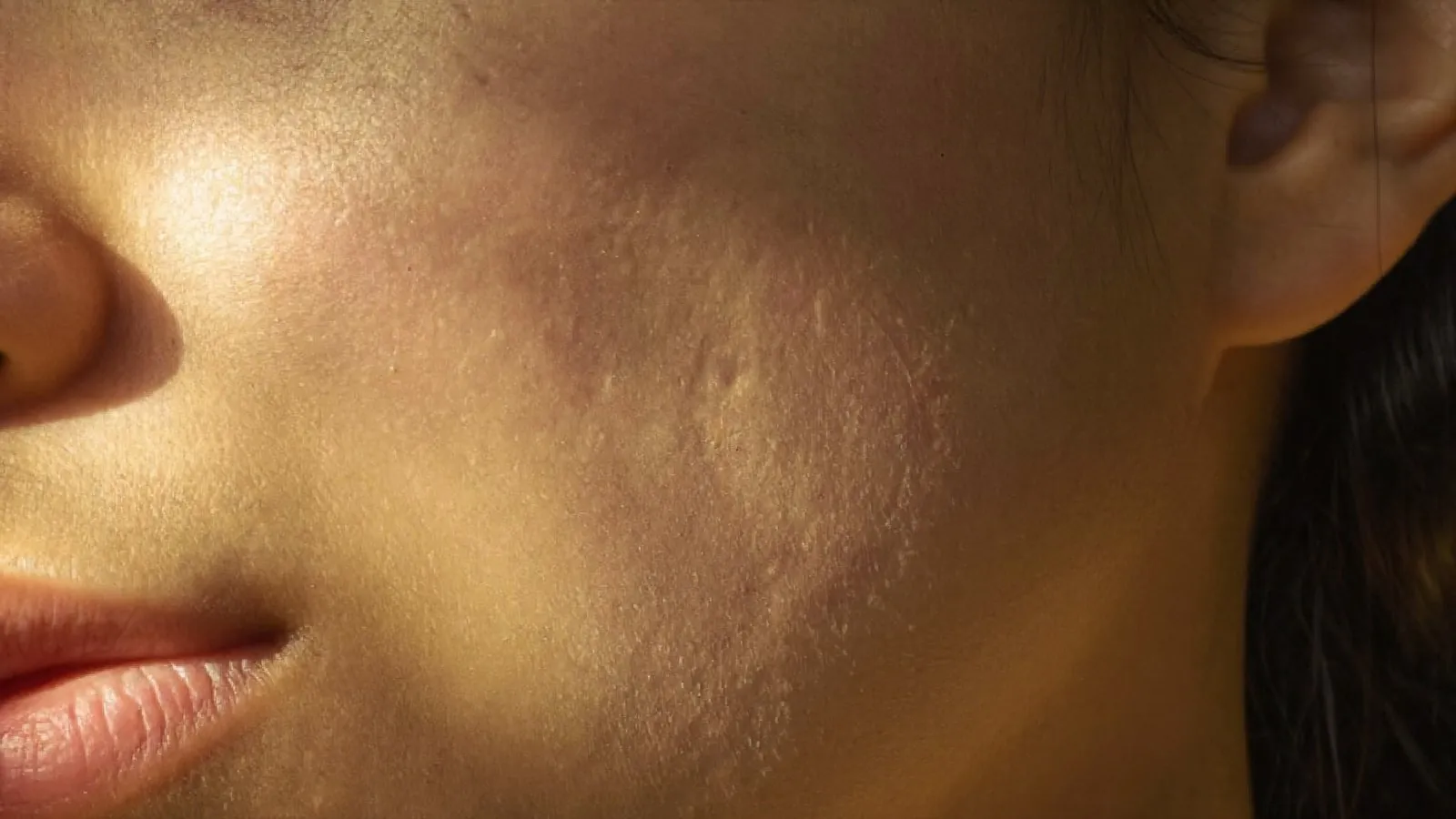
Acne scar types are icepick, boxcar, rolling and tethered scars, told apart by width, wall shape and depth, and most scarred cheeks carry several types side by side. Because each type responds to a different approach, such as subcision or fractional resurfacing, scar type is identified under directed lighting and skin stretch before any device is chosen.
Not sure which scar type you have? Try the four-question checker →
Key facts
- Icepick scar
- Narrow, usually under 2 mm across at the surface. A deep V-shaped tract that can extend into the deep dermis
- Boxcar scar
- Round to oval depression with sharply demarcated, near-vertical walls — a U-shaped cross-section, shallow or deep
- Rolling scar
- Wider than 4–5 mm, with a soft undulating surface produced by fibrous bands pulling from below
- Tethered scar
- Any depression anchored by a fibrous band to deeper tissue. Deepens visibly when the face animates
- Atrophic vs hypertrophic
- Atrophic scars are a tissue deficit; hypertrophic scars are an excess of collagen. Opposite problems, opposite treatments
- Subcision
- Release of the fibrous tether beneath a scar with a needle or cannula, working in the subcutaneous plane
- Fractional resurfacing
- Micro-columns of controlled injury within the dermis, with intact skin between them driving repair
- Skin types in Singapore
- Predominantly Fitzpatrick III–V, where inflammation from over-treatment can itself leave pigment behind
TreatmentKnowing the type is step one. The
acne scar removal Singapore guide shows which tool Dr Sin Yong assigns to each type and why depth decides between FSX Laser and the S3 Resurfacing Lift.
In briefAcne scar types are ice-pick, boxcar, rolling and tethered, and most scarred cheeks carry more than one. Ice-pick scars are narrow deep tracts, boxcar scars have sharp vertical walls, rolling scars are wide and undulating, and tethered scars are anchored from below by a fibrous band. Each responds to a different tool, which is why the map of scar types decides the plan before any device is chosen.
Acne scars types: ice-pick, boxcar, rolling and tethered
The four atrophic acne scars types are told apart by shape in cross-section and by what happens when the skin is stretched. Ice-pick scars are narrow and deep; boxcar scars have a flat floor and steep walls; rolling scars are wave-like with soft edges; tethered scars are rolling scars held down by a fibrous band that does not flatten on stretch. Each has its own page: ice-pick scars, boxcar scars, rolling scars.
Four scar types, one cheek
The classification most clinicians use — described by Jacob and colleagues in 2001 — divides atrophic acne scars into three morphologies, and each one is a different structural problem.
Icepick scars are narrow pits, usually under 2 mm across at the surface, tapering into a V-shaped tract that can reach deep into the dermis. They look small and they are the hardest to reach, because most resurfacing energy never gets to the bottom of the tract.
Boxcar scars are broader depressions with sharply demarcated walls — a U-shaped cross-section, as though a small volume of skin were punched out. Their depth varies, and depth is what determines how they are approached.
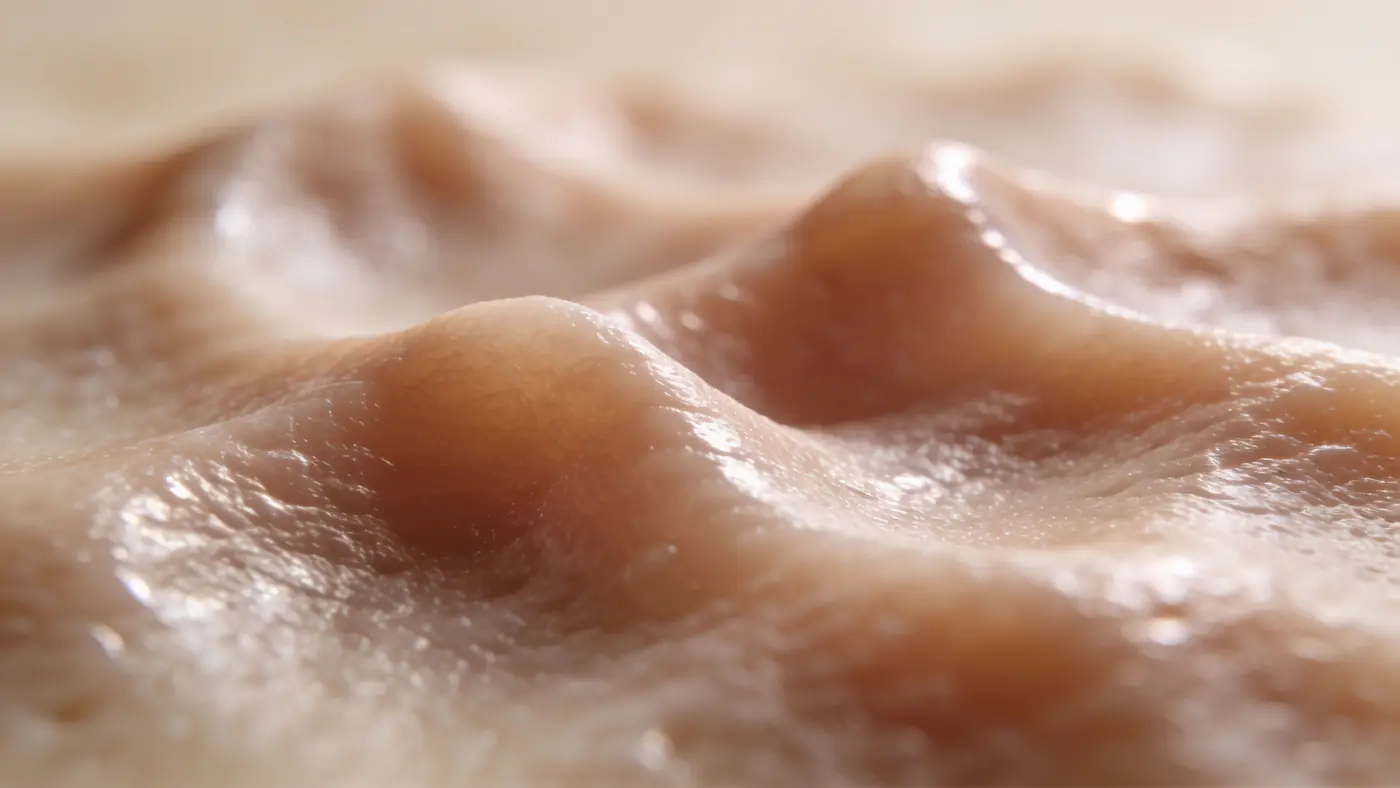
Rolling scars are wider still, typically beyond 4–5 mm, with soft shoulders and an undulating look. Their cause is not at the surface at all: fibrous bands beneath the skin pull the dermis downward, the way an upholstery button dimples a cushion.
And running through all three is the question of tethering — whether a scar is anchored to deeper tissue by a fibrous band. A tethered scar deepens when you smile or animate, and it will shrug off surface treatment for as long as the anchor remains. I have written about this separately in the guide to tethered scars and subcision, because it is the single most common reason scar treatment disappoints.
Why one device for every scar is the wrong room
If a clinic examines your cheek and offers a single machine for everything on it, the assessment has stopped too early.
The reason is mechanical. An icepick scar is a deep, narrow tract — surface resurfacing planes down its shoulders but cannot follow it to the base. A rolling scar is held down from below — no amount of surface work releases a band that sits in the subcutaneous plane. A shallow boxcar, meanwhile, may respond well to exactly the fractional resurfacing that does little for the other two. Same cheek, three mechanisms, three answers.
There is also a direction-of-error problem specific to Singapore. Most of the skin I treat is Fitzpatrick III to V, where inflammation reliably produces post-inflammatory hyperpigmentation. Treating every scar with the aggressive settings the worst scar seems to demand risks trading texture for pigment — swapping one visible problem for another. Energy is chosen for the skin type as much as for the scar.
None of this means any single device is poor. It means a device is an instrument, and instruments follow diagnosis.
“If someone offers you one treatment for your acne scars, they haven't looked closely enough.”
Dr Sin YongOn single-device scar plans
Why Acne Scars Need a Tailored Approach
Acne scars form when inflammation from acne damages the skin's collagen. The type of scar left behind depends on how that damage healed. Pitted, depressed scars — the atrophic scars most people mean by acne scarring — divide into ice-pick scars, boxcar scars and rolling scars, each with a different shape and depth. Flat brown or red pimple marks left after a breakout are pigment rather than true scars, and raised keloid or hypertrophic scars are a separate category again.
This is why there is no single right acne scar treatment. A fractional CO2 laser that refines the surface of a boxcar scar does little for a deep ice-pick scar; subcision that releases a tethered rolling scar does nothing for pigmentation. Dr Sin Yong assesses your exact mix of scar types first, then plans acne scar removal around them — so that each scar type is matched to a method suited to it.
Most people who seek acne scar treatment in Singapore have more than one type of scar at once, along with some pigmentation and enlarged pores. A combination plan addresses each of these on its own terms.
Dr Sin Yong’s toolkit is matched to the structure of each scar: subcision for tethers, TCA CROSS for narrow ice-pick tracts, fractional CO2 resurfacing for edges and texture, RF microneedling for boxcar and rolling scars, and collagen-stimulating injectables where volume beneath is lost. Methods are layered and planned as a series because collagen remodels gradually. The sequence he uses is set out on the Scar Repair Programme.
Myths we hear in clinic
“One laser can treat every type of acne scar.” Different scar shapes form differently, so ice-pick, boxcar and tethered rolling scars each need a method suited to them.
“Brown or red marks after acne are scars that need resurfacing.” Flat marks are pigment or redness rather than true scars and are treated with different, pigment-focused approaches.
The scar-by-scar map, and how it changes the plan
In my acne scar assessments, the useful work happens before any treatment is named: the cheek is examined under directed lighting, at rest and in animation, with the skin stretched between two fingers. Stretching matters because it separates the scars that flatten — surface problems — from the ones that stay pinned down, which are tethered.
What comes out of that examination is a map rather than a verdict. This region is predominantly rolling and tethered; these clusters are icepick; this scatter of boxcars is shallow enough for resurfacing alone. Each entry on the map carries its own method: release for the tethered scars, focal techniques for the deep narrow tracts, fractional resurfacing for the surface change, support where volume has been lost beneath.
The map also sets the order. Releasing tethers before resurfacing means the surface work is done on skin that is free to remodel flat, rather than skin still pinned to its anchor. Sequence is not a detail — done backwards, each step undermines the next.
This is also why I am wary of scar consultations conducted from photographs. A photograph flattens exactly the information — depth, tethering, behaviour on animation — that the plan depends on.
Combined methods, staged over time
Because a scarred cheek is several problems at once, the honest plan is almost always a combination — and combinations are staged, not stacked into a single heroic visit.
My 4D Scar Reconstruction protocol is built on exactly this logic: it addresses the scar in four dimensions — the tether below, the volume deficit, the scar walls, and the surface texture — matching a method to each rather than hoping one energy source covers all of them. Which components apply, and in what order, comes out of the map, not out of a menu.
Staging is deliberate for another reason: skin needs time between insults. Collagen remodelling after each step continues quietly for months, and the skin's response to the first stage genuinely informs the second. Response varies between individuals and between scars on the same face, which is why the plan is reviewed as it proceeds rather than fixed at the outset.
What I will not do is promise a number of visits or a percentage of improvement. Anyone who quotes either before examining your skin in person is estimating, not assessing.
Why this page has no before-and-after images
Acne scarring is one of the areas where people most want to see photographic proof, so the absence deserves a direct explanation.
Under Singapore's Healthcare Services Act, before-and-after imagery in advertising for licensable healthcare services is prohibited. No consent form or disclaimer creates an exemption, and after-only images fall under the same rule. This applies identically to every licensed clinic in Singapore — a site displaying such images is not demonstrating better results, only weaker compliance.
What can happen instead is an examination of your own scars, in person, where depth and tethering can actually be felt rather than guessed at from a screen.
What determines the cost
Prices for licensable healthcare services cannot be advertised in Singapore, including as ranges or "from" figures. What can be set out honestly is what the cost depends on.
The factors are the area involved, what the assessment finds — how many scar types are present, how many are tethered, how deep the tracts run — whether a single method or a combined protocol is indicated, and how the plan is staged over time. A scatter of shallow boxcars on one cheek and a decade of mixed, tethered scarring across both are not comparable pieces of work.
Fees are set out in full at consultation, once there is something specific to cost. If you want the mapping done thoroughly before committing to anything, that is precisely what a private aesthetics analysis is for.
The part worth saying first
Acne scarring is not one condition. It is icepick tracts, boxcar depressions, rolling tethered valleys and sometimes raised scars, sharing one cheek and requiring different answers — which is why the examination matters more than the machine, and why single-device plans so often stall.
Dr Sin Yong — MBBS (NUS), MRCS (Edinburgh), MSc Aesthetic Medicine with Distinction (Queen Mary, London), MSc Practical Dermatology (Cardiff) — maps scars personally on Orchard Road, and will tell you plainly which of yours need release, which need resurfacing, and which are better left alone.