Key facts
- Wavelength
- 10,600 nm, absorbed by water in tissue
- Category
- Ablative and fractional: the surface within each column is removed
- Mechanism
- Vaporised microscopic columns heal from the intact skin between them while the dermis remodels collagen
- Used for
- Acne scars, surgical scars, coarse texture and photoaging
- On this site
- The DEKA SmartXide Tetra Pro platform behind the S3 Resurfacing Lift
What is a fractional CO2 laser?
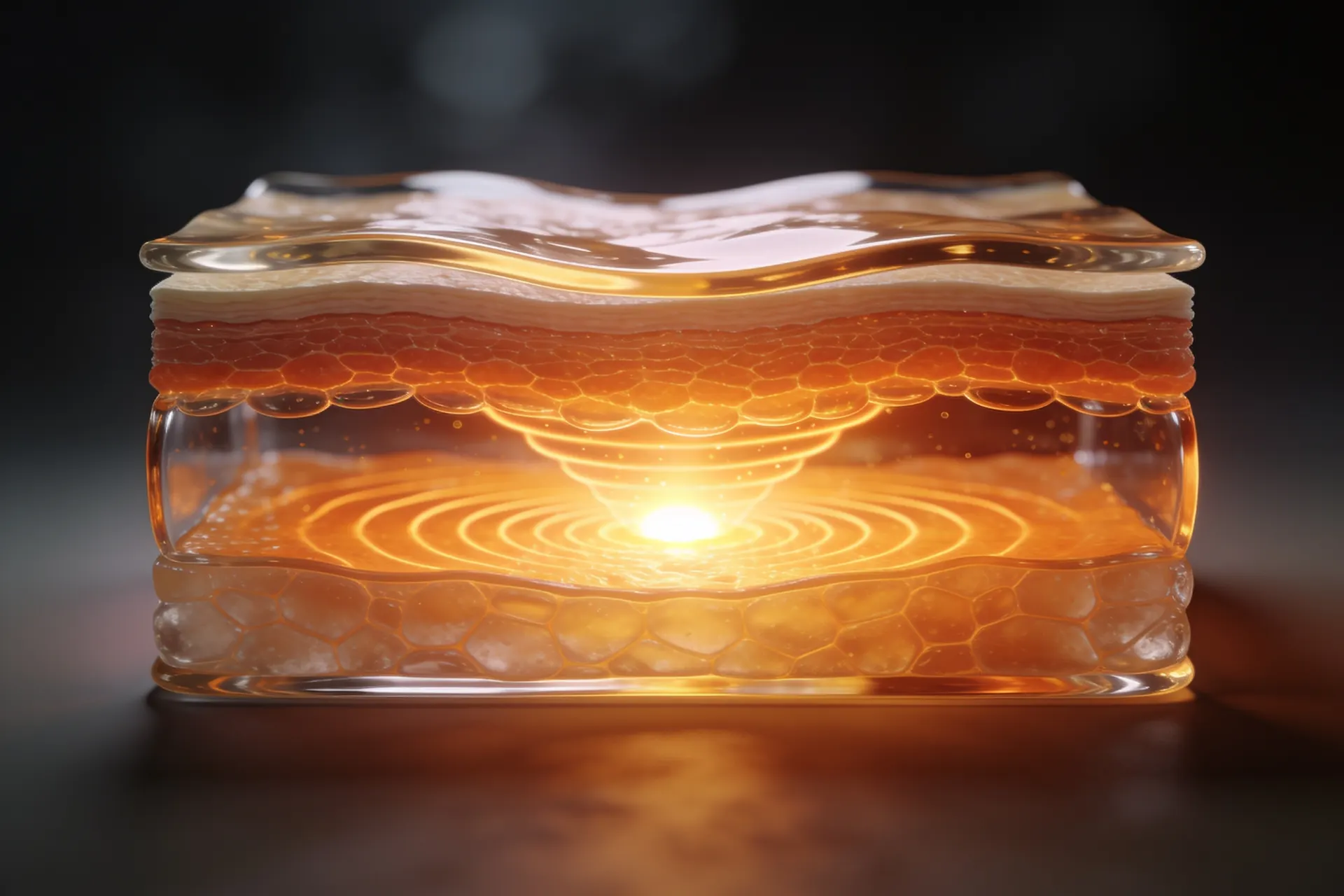
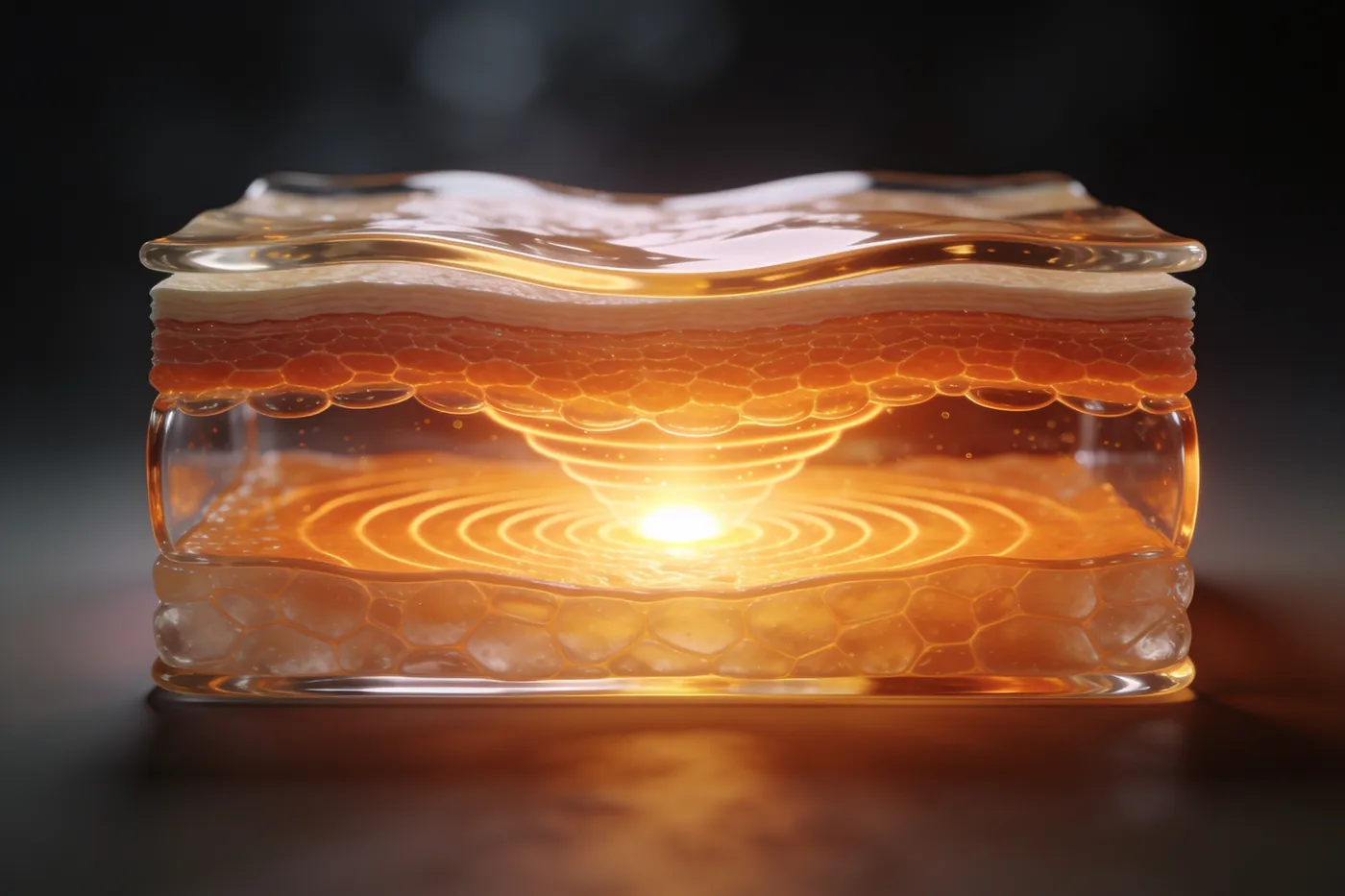
A fractional CO2 laser is a carbon dioxide laser that delivers its 10,600 nm energy in a grid of microscopic columns rather than across the whole skin surface. Water absorbs this wavelength so strongly that each column of tissue is vaporised, leaving a tiny open channel surrounded by a rim of heated, coagulated tissue. The skin between the columns is untouched, and it is from these bridges that the surface repairs itself.
Two things happen as the channels close. The heat rim drives contraction and a collagen response in the dermis, and the physical removal of tissue allows the edge of a scar to be remodelled. This is what separates ablative resurfacing from treatments that only warm the dermis beneath an intact surface. The principle of treating columns separated by untreated skin was described as fractional photothermolysis in 2004, and it now underpins most fractional lasers, ablative and non-ablative alike.
How is it used in aesthetic medicine?
Its main uses are atrophic acne scars, surgical and traumatic scars, coarse texture and sun-damaged skin. Because density and depth can be set separately, the physician can place dense, deep columns where scars sit and lighter passes on the skin around them. Dr Sin Yong's S3 Resurfacing Lift uses the DEKA Tetra Pro in this way: point shots are placed into individual scar pits first, then the surrounding skin is resurfaced fractionally, and the laser is sequenced with subcision and TCA CROSS where the scar pattern calls for them.
Expect a healing phase. The treated skin is red, swollen and warm at first, then forms fine crusting and peeling as the channels close, followed by a pink phase that fades. How long this takes depends on the depth and density used and on the individual, and it is discussed before treatment. In Fitzpatrick III to V skin, which predominates in Singapore, post-inflammatory hyperpigmentation is the main risk, so energy, density, intervals and sun protection are chosen for the skin type.
“Resurfacing parameters do not transfer between skin types. A setting validated on lighter skin is a starting point in Asia, not an answer.”
Dr Sin YongOn why published laser settings are only a starting point
What is it often confused with?
A fully ablative CO2 laser removes the entire surface of the treated area rather than a grid of columns. It uses the same wavelength, but the wound is continuous, recovery is longer and the pigment risk in darker skin is greater. A fractional laser is not necessarily a CO2 laser either: fractional describes the delivery pattern, and non-ablative devices such as 1540 or 1550 nm erbium glass lasers, including Fraxel, also treat in columns but heat the dermis without removing the surface.
The erbium:YAG laser at 2,940 nm is also ablative but is absorbed by water far more strongly, so it vaporises tissue with a thinner zone of heat around each column and less of the tightening response that CO2 produces. The word erbium also appears in erbium glass, a non-ablative wavelength that is part of Dr Sin Yong's FSX Laser for shallower texture and redness. When a clinic says fractional laser, the useful questions are whether it ablates, how deep it reaches and how the settings are adapted to your skin type.
When is it not the answer?
Resurfacing works on the surface and the dermis, so it does not release a rolling scar that is tethered from below; that is the job of subcision, usually sequenced first. A narrow, deep ice pick scar is a well rather than a dip, and fractional passes polish the ground around it without changing its depth, which is why TCA CROSS exists. A CO2 laser is not a pigment treatment, and in active melasma or skin prone to post-inflammatory darkening it can create pigment rather than clear it.
Active acne is usually controlled first, because resurfacing inflamed skin risks new marks. A current cold sore or skin infection, recent isotretinoin, a fresh tan and pregnancy are reasons to delay or choose differently. A tendency to keloid or raised scarring changes the plan rather than automatically excluding treatment. Where scars are shallow and a shorter recovery matters, a non-ablative option is often the better starting point, and the choice is made by examining the scars, not by the name of the device.